
Ever wondered what’s with all the discarded little silver cannisters littering the streets & countryside?
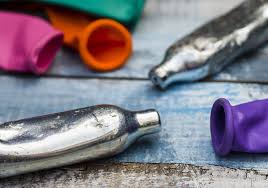
Solvent abuse is sometimes a generic term for use of Inhalants referring to the method of use. This usually involves inhaling of a chemical, perhaps once a liquid that has become a gas at room temperature as with volatile substances like petrol, or substances already in gas form like aerosols . They can be found in many every day substances like some cleaning products, aerosols, glues, and in those little silver cannisters that you’ve probably come across littering the streets & countryside in recent times.
This type of substance abuse is largely, but not exclusively, carried out by youngsters. Data suggests that around 4 – 7.6% % of adolescents in Ireland & the UK have used inhalants to get high, with regular use thought to be between 1 & 2%. Studies have shown that they can be a gateway substance: A substance which by the use of or exposure to the sub-culture of users leads to abuse of other substances.
Using inhalants isn’t a modern phenomenon. Use of solvents dates back at least as far as the 19th century when use of nitrous oxide – the same stuff in the silver cannisters littering the streets – was popular. When I was growing up people talked of glue sniffers and inhaling aerosols like lighter fluid. The problem hasn’t died away, like everything else, it is a trend that has evolved over time.
These substances are usually taken for their exhilarating effects & the sense of euphoria users experience.
Methods for use include direct inhalation, putting the liquid solvents on cloth to inhale, or putting a substance into a plastic bag to inhale. The method of use, type of substance used & strength of gas inhaled, as well as the individual’s physiology are factors in levels of intoxication; And the methods of use carry different dangers, too. For example, use of a plastic bag over the head can result in suffocation.
The impact on health as a result of abusing inhalants is a mixed picture. Short term occasional use is dangerous however much less so than ongoing, long term use which can result in damage to the kidneys, liver & brain. Death is also a possible consequence but something else that also needs to be considered are where inhalants are used. If the substances are abused in situations that are already dangerous, like on a roof or near roads or rail track when intoxication effects inhibitions, disorientation, perception, & coordination.
Development of dependency is also a possibility with ongoing use however, tolerance levels are usually unaffected and withdrawal symptoms after cessation of use is unusual although very heavy users may experience symptoms like headaches & stomach cramps after cessation of use.
Solvents usually fall into 4 types:
- Volatile Solvents: Like glue, paint thinners, petrol.
- Aerosols: Like deodorants, hair spray.
- Anaesthetics: Like nitrous Oxide.
- Volatile Nitrates: Like amyl nitrate.
The psychoactive ingredient in most inhalants in Toluene which enhances dopamine production (the feel good chemical) in the brain. Some manufacturers now add substances like mustard oil to their products which deters use by irritating the air passage when inhaled; i.e. You might try it once but the experience is unpleasant so don’t try it again.
Effects of inhalants include:
- The effect tends to be short-lived. Anything from 10-15 seconds up to 30-45 minutes with repeated use and with some methods intoxication can last for up to 12 hours.
- The user may feel tired & drowsy after use, perhaps experiencing a hang over which can last for several days.
- Intoxication impairing inhibitions regulation, disorientation, perception, & coordination. It is also thought to increase the intensity of orgasm if used before or during sex.
- The method of use (inhalation) boosts absorption into the blood stream which is then distributed to various organs, particularly those with high demand for blood flow like liver & brain.
- Dangerous physical effects include:
- Sudden Heart Failure
- Brain damage
- Damage to liver & kidneys
- Hallucinations & delusions
- Vomiting
- Paralysis
- Coma
- Cognitive impairment
- Cancer
I hope you feel a little more informed about inhalants & solvent abuse. If you’d like to talk about this or any other mental health issue get in touch with us at BroadMinds Therapy for a free, private & discrete discussion.
We remain open for business and are willing & happy to help.
Finally, if you like what you have read please remember to ‘like & share’ and help us reach & help as many people as possible.


