In my last post I described the categories of support pathways you may consider if you’re looking for help with your mental health. But What next?
There are many different types of therapy, just as there are many different types of drugs and medical procedures for various physical ailments. In fact, there are so many (Talkspace.com note over fifty!) that you probably wouldn’t make it to the bottom of the page, the only thing keeping you from dozing off being your forehead bouncing off your screen, if I tried listing them.
So, again.. and for the sake of your sanity and my finger tips, let’s try to keep things simple.
Over the next few articles I’ll try to explain and explore some of the more common types of therapy open to you – the kind of therapy you’re most likely to find in your nearest town or when you look for a therapist online.
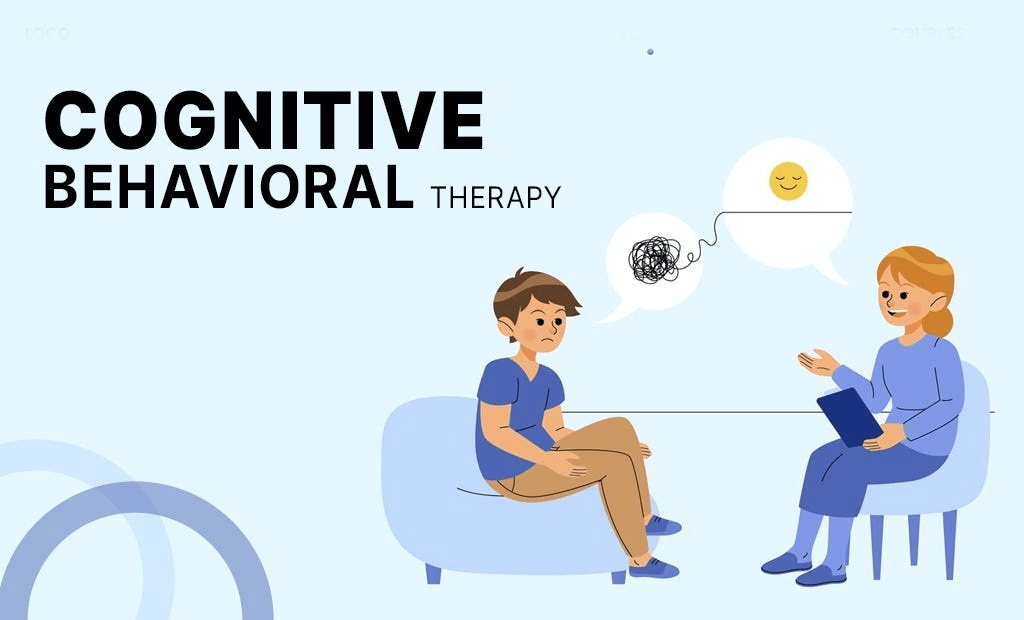
I’ve decided to start with CBT, or Cognitive Behavioural Therapy, if you prefer. I’m starting with this because it has become increasingly common to find therapists practicing in this form over the past 25-30 years or so. In fact, if you get a referral for talking therapy from your doctor in the UK & Ireland, you will almost certainly be referred to a therapist offering CBT.
There are 3 main reasons for this:
- It does have a strong evidence base – Research supports it’s efficacy so it’s considered well supported by science.
- It’s a very structured & focused approach which has many advantages, including helping clients stay focused on an issue when they might feel all over the place.
- It’s is usually time-limited to between 6 & 12 sessions. This makes it easy to plan treatments and budget for.
So what is it and what does it actually do?
In short…
- CBT is goal oriented. The client and therapist will identify a goal and work out a structured way approaching that goal to increase the chances of success in pursuit of that goal. For example, if you want to feel less anxious in social situations, a therapist will explore your current experiences, what your preferred experienced is, and then try to chart a pathway between the two.
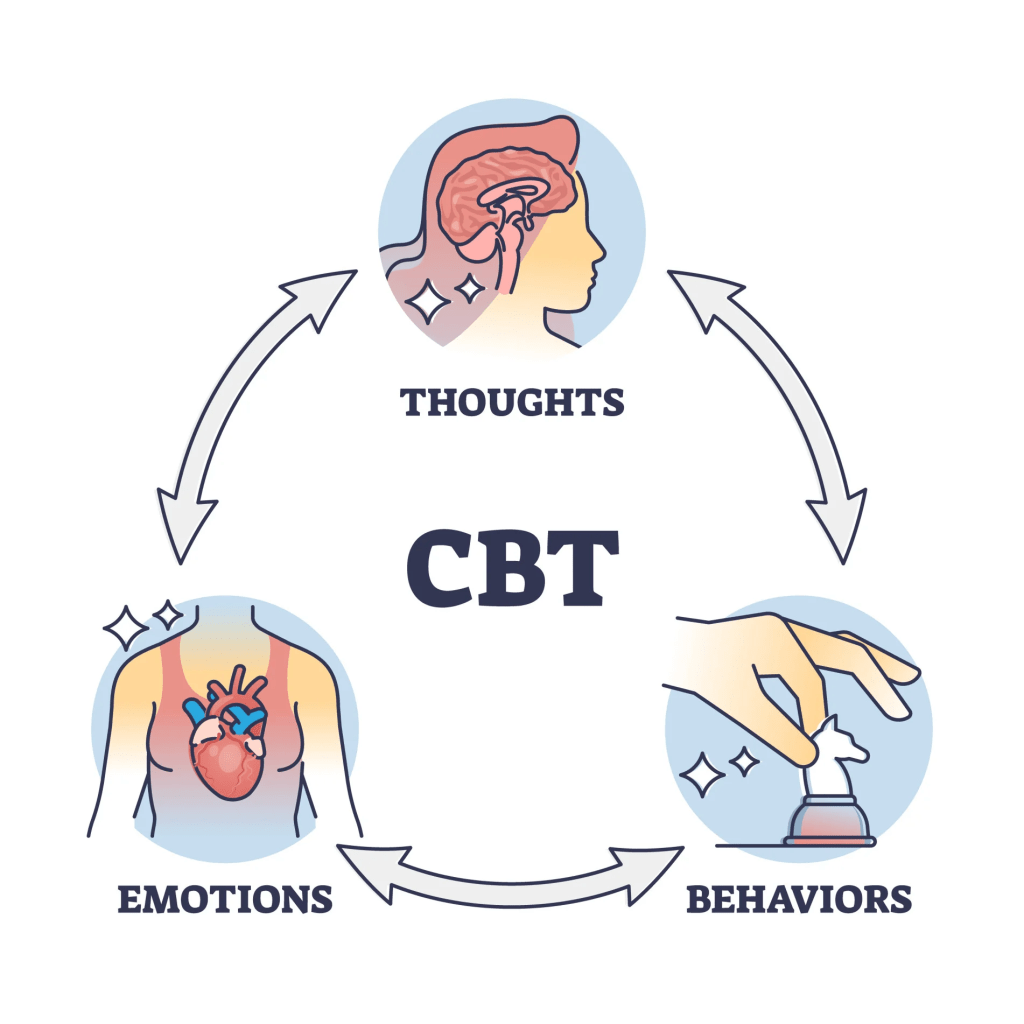
- CBT recognises the relationship between 3 key experiences of life: The mutual influences of our thinking, emotional and behavioural experiences – as in the picture below. For example, if you are fearful of spiders, it explores what thoughts, beliefs, etc, you have about spiders that drive that fear. By working with these thoughts, beliefs and thinking styles, the fear can be managed to a point where the sufferer feels much less afraid, if at all, of the fearful object.
- CBT is inquisitive. It questions your experiences and responses to improve self-awareness, understanding, and move towards the changes you desire.
Of course, there’s much more that can be said about CBT – there are a great many books on the subject. However, when we’re looking for help, we usually want it sooner rather than later & the thought of spending 12 months in the library reading up on CBT is unlikely to appear anywhere on your to-do list.
What are the advantages and disadvantages?
- Advantage: It is very effective at treating many common issues such as stress & anxiety, anger and aggression, insomnia to name a few.
- Disadvantage: Some studies have shown that it is less effective at issues such as personality disorders & pain management.
- Advantage: The time-limited nature of the treatment cycle means that it can be easier to budget for, for whoever is paying the bill.
- Disadvantage: When working with more complex issues, such as client’s who have a multiple issues, the time-limited nature of the work may mean that it’s simply impossible to work with all the issues in the typical cycle of treatment.
- Advantage: The popularity of CBT means there’s usually a CBT therapist practicing nearby if you want face-to-face therapy but it’s also suitable for online therapy so you can should be able to access it from just about anywhere!
- Disadvantage: It’s ubiquity can make it feel like it’s the default option whereas there are other equally good options available.
This is by no means an exhaustive list.
My advice when choosing a therapist or type of therapy for you is always the same no matter what your issue. Pick up the phone and talk to the therapist you are considering working with. This gives you a chance to briefly explain your issue and the therapist an opportunity to describe how they might work with you.
In so doing, you get a chance to experience what it’s actually like talking to that therapist and get a feel for whether they’re someone you feel you can talk to. You are likely to be sharing some very personal information so you need to feel comfortable talking to that person.
For this reason, I always offer a free consultation to provide that opportunity at no cost but I’m sure that any good therapist would at least be willing to talk to you briefly on the phone to provide that opportunity.
Watch out for my next article. Everyone’s heard of Freud, right? So, let me take you on a brief tour of psychodynamic therapy.
If you’d like to discuss Counselling & Psychotherapy for yourself or someone you know, contact BroadMinds Therapy and we’ll be happy to answer any questions you have and discuss options for you.
Call 0899420568
Email: help@broadmindstherapy.org
Facebook: BroadMinds Therapy | Facebook
Web: https://broadmindstherapy.org
If you like what you read please like & share to help us reach & help as many people as possible.
As always, thanks for taking the time to read this article.

 Integrative Counselling And Psychotherapy