
So the schools are back and maybe you’re breathing a sigh of relief after a demanding summer of juggling child care and all life’s other challenges. I invite you to pause & think about our children’s experience of life. Sadly, there are many assumptions made by adults about what life is like for children in any given day & age. I hear things said like:
Kids…! What have they got to worry about?!
Unfortunately I’ve heard this all too often. People reflect on their experiences growing up and assume that it is more or less the same for everyone else; Or worse still, assume that the kids of today don’t have it half as tough as they did what with the internet and smartphones, and all..
The idea being that, certainly in the western world, we live a life with so much available to us that mental distress is a thing of the past. Those who can’t cope with this are accused of being part of a ‘snowflake’ generation.
The problem is that material wealth doesn’t inoculate us from mental distress & ill-health; And, in any case, the gap between rich & poor in many western countries has grown rather than shrunk.
So, sure, kids may well have access to the internet, they may well have a smart phone, but maybe their home-life is dysfunctional, or they often go hungry or thirsty.
Maybe they are struggling at school or being bullied, maybe they’re being bullied online or having hurtful things said about them.
Maybe they are victims of abuse or are witnessing abuse to others.
Maybe the every increasing success rate in exam results means that kids are under even more pressure to perform and achieve.
It all creates a recipe for mental distress and potential subsequent mental illness.
A 2018 study showed that 79% of children worry. So what do they worry about?
16%: Family, Friends & loved ones.
12%: Performance at school
11%: Safety
9%: Social Issues (Inc. Politics)
9%: Loneliness & bullying
6%: Health
The list of potential stressors for today’s children is endless. Life has improved in some ways over the years but in others it has made children more vulnerable. No child born before the 1990’s was ever constantly accessible for abuse online.
But, it is a fruitless exercise to look back through the ages & try to work out who had it hardest. Even if we manage to arrive at an agreed answer on that, how does that knowledge help the children of the past, the present or the future if all we are going to do is judge a generation for it?
Far better to work out what causes distress in childhood and workout what interventions we can make to help children develop coping skills that will serve them well for the rest of their lives.
One such intervention is to help children develop a better emotional literacy.
A what, now? It’s a more professional-sounding way of saying helping children identify how they feel, understand it, express & explain it. And, hopefully, they will have good enough relationships with other people in their lives that they feel confident enough in their thoughts & feelings.
I use a four stage model for this:
Identify how we are feeling – See the gauge below.
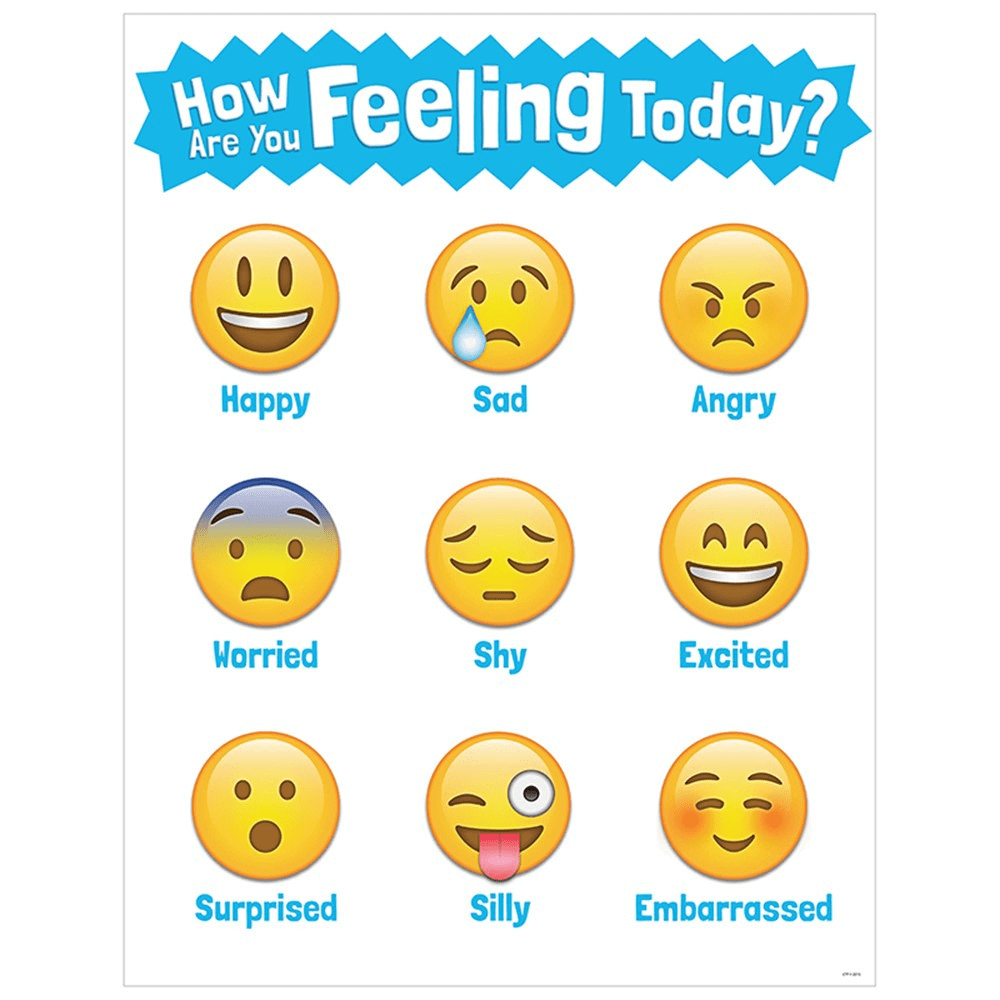
Give an example of that feeling. I feel sad when people shout.
Express how we feel – share are feelings with others we trust.
Try to understand & explain why we feel that way. For example, I feel sad when people shout because it scares me.
There are, of course, more emotions that can be experienced but this is a starting point. I recommend putting this up somewhere in the house where everyone can see & has access to it. The fridge door is usually a good spot.
Everyone in the house is required to indicate how they are feeling, together. This opens up a regular dialogue between everyone at home so that feelings & thoughts are discussed openly & honestly.
The therapeutic value of simply being able to talk about our feelings cannot be underestimated. It is why Psychotherapists & Counsellors exist!
As I’ve said in previous & recent articles, family dynamics & helping our children get back to school after the summer holidays aren’t in themselves mental health issues, but they can have a huge impact on our mental health. Finding more effective ways to manage those factors & transitions can be very helpful in managing our mental well-being.
If you would like to talk, BroadMinds Therapy offer a free consultation during which you’ll get the opportunity to describe what’s on your mind & we’ll be happy to help you, either directly, or help identify the best options for you.
If you’d like to discuss Counselling & Psychotherapy for yourself or someone you know, contact BroadMinds Therapy and we’ll be happy to answer any questions you have and discuss options for you. Call 0899420568, email: help@broadmindstherapy.org , contact us via this website or via our facebook page: https://www.facebook.com/jpbroad
If you like what you read please like & share to help us reach & help as many people as possible.
As always, thanks for taking the time to read this article.

 Integrative Counselling And Psychotherapy