
Depression is a term that gets thrown around a lot. It’s not unusual to hear people say that they feel a bit depressed, using the term to describe feelings like sadness or despair. That’s understandable – depression often involves these experiences but there is a difference between the common use of the term and the clinical definition. Here I hope to help you reduce the gap between the common understanding and use, and make a clinical definition more accessible.
Depression is something of an umbrella term that can involve feelings of sadness, loneliness & despair but is a deeper experience than these alone.
Depression comes in different shapes & sizes, albeit, with common symptoms. These include:
Unipolar Depression – The sufferer experiences a severe depression without experiencing relief or highs.
Bipolar Depression – Formerly known as Manic Depression, it is characterised by extreme highs & lows. The individual sufferers mood swings between the two extremes over time periods, either rapidly over short periods or slowly over longer periods of time.
Major Depression – Formerly known as Chronic Depression, typically suffers are apathetic, experience persistent low mood, and are disinterested in activities.
Mild Depression – The sufferer finds engagement with daily functioning & activities difficult and has a sense of living an unfulfilled life. T
Atypical Depression – There are parallels with the symptoms of Major Depression however, the sufferer may experience periods of happiness & enjoyment along with fatigue, and excessive sleeping & eating.
Persistent Depressive Disorder – Symptoms include an inability to find enjoyment in life, dissatisfaction with life, feeling unimportant, often scared but do not recognise their symptoms as an illness – Moreover, seen as an integral part of life.
Psychotic Depression – Sufferers experience frightening or negative hallucinations.
Seasonal Affective Disorder – Symptoms includes mood swings that seem to be influenced by the seasonal cycle, often with the worst of symptoms experienced during the winter months.
Postnatal Depression – A condition which may develop, usually between weeks 4 & 6 following giving birth although it can begin before or after that period. Symptoms can include mood swings, lack of interest in both oneself and/or the baby, low energy & fatigue, and decreased libido.
Premenstrual Dysphoric Disorder – Symptoms are usually strongest in the final week of menses but improving following the onset of menses.
Common Symptoms of Depression include:
Physical Symptoms:
- Headaches
- Stomach aches
- Other miscellaneous and inexplicable aches & pains that have no physiological cause
- Fatigue
- Low or loss of energy
- A change in eating patterns – either eating more or less than usual
- Disrupted sleep patterns – sleeping too much or not being able to sleep well
Behavioural Symptoms:
- A reduction of enjoyment of activities you previously took pleasure from
- Reduced interest in activities
- Reduced memory, ability to concentrate or ability
- Reduced decision making abilities, greater than experienced before
- Neglecting responsibilities
- Neglecting personal appearance &/or hygiene
Emotional & Cognitive:
- A sense of apathy, greater irritability, pessimism, hopelessness, negativity, guilt &/or shame
- Suicidal ideation
- Feelings of low self-worth & self-esteem
- Feeling like there is little point in living
What Causes Depression?
Exogenous Depression: Depression arising from external factors such as environmental factors. Medicinal supports are often aimed at remedying these causes, with drugs such as SSRI’s – common names include Sertraline & Lustral.
Endogenous Factors: Depression arising from internal factors such as brain chemistry. Talking Therapies such as Counselling & Psychotherapy are often aimed at these causes.
However, it is not quite so simple as identifying one of the above causes and then deciding whether to go for medicinal treatment or a talking therapy. Firstly, there may be more than one cause. Identifying a cause in itself is complicated and it is unlikely that any GP will be able to do so in the constrained time-limited window they have for a consultation. It is complicated further because people don’t live their lives simply internally & externally at different times. They live in both planes at the same time, each having profound effects on the other.
It is therefore useful to look at risk factors as a means for breaking down the problem of diagnosing and even preventing depression.
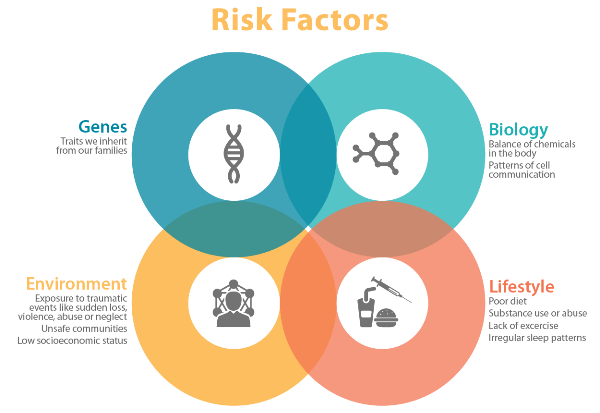
- Genes: There can be a genetic component in depression however having the related genes doesn’t mean that you will definitely develop depression just as not having the related genes doesn’t mean you won’t develop depression.
- Biology: Factors like brain chemistry can plan a key role in brain chemistry in depression but having depression doesn’t mean that this is necessarily down to brain chemistry. For a start, there is no readily available & easy-to-administer test to determine if chemistry is the cause of your depression. Often, treatment with anti-depressants is simply trial & error and, although the help many people, they don’t help everyone.
- Environment: We are becoming increasingly aware of the environmental components in developing depression. This can include anything from where you live & work, the relationships you have, financial security and living conditions, right through to the economic & political cultures we live in which influence our personal conceptions of ourselves.
- Lifestyle: Again, another factor we are becoming increasingly aware of. This is about what you put in your body and what you do with it. if you treat it badly but eating poor quality food like junk food or drinking alcohol, or abusing substances, you cannot reasonably expect your body & mind to function well.
So, What to do…? – Preventing & Treating Depression:
If the above sounds familiar and you think you may be suffering with depression I would urge you to step back from self-diagnosis and seek professional advice, starting with your GP. They will make an initial assessment & diagnosis and identify an initial treatment plan which will probably include prescribing some anti-depressants. However, there are some things that you can do which often help in treating & recovering from depression.
- Support Network: Consider your support network. Who are the main supports in your life that you can count on. Here are a few tips to help you identify a high quality support network:
- Professional Supports. These may include people like your GP, Psychiatrist, or a Counsellor & Psychotherapist, or any support groups that you may be attending.
- Informal Supports. These will include family & friends.
- Employer. Consider discussing your mental health with your employer. Not only will this give them the chance to make any necessary adaptions to your workload & work type but some employers have Employee Assistance Programmes which can provide access to funded counselling services.
Don’t simply list these out. Include information like hours of availability and details of the specific skills or qualities each can offer. After any engagements with each of these, go back & review your network and grade any particular person or agency you’ve contacted. The idea is to refine your network so in future you can contact the best option for you in any circumstance and at any particular time.
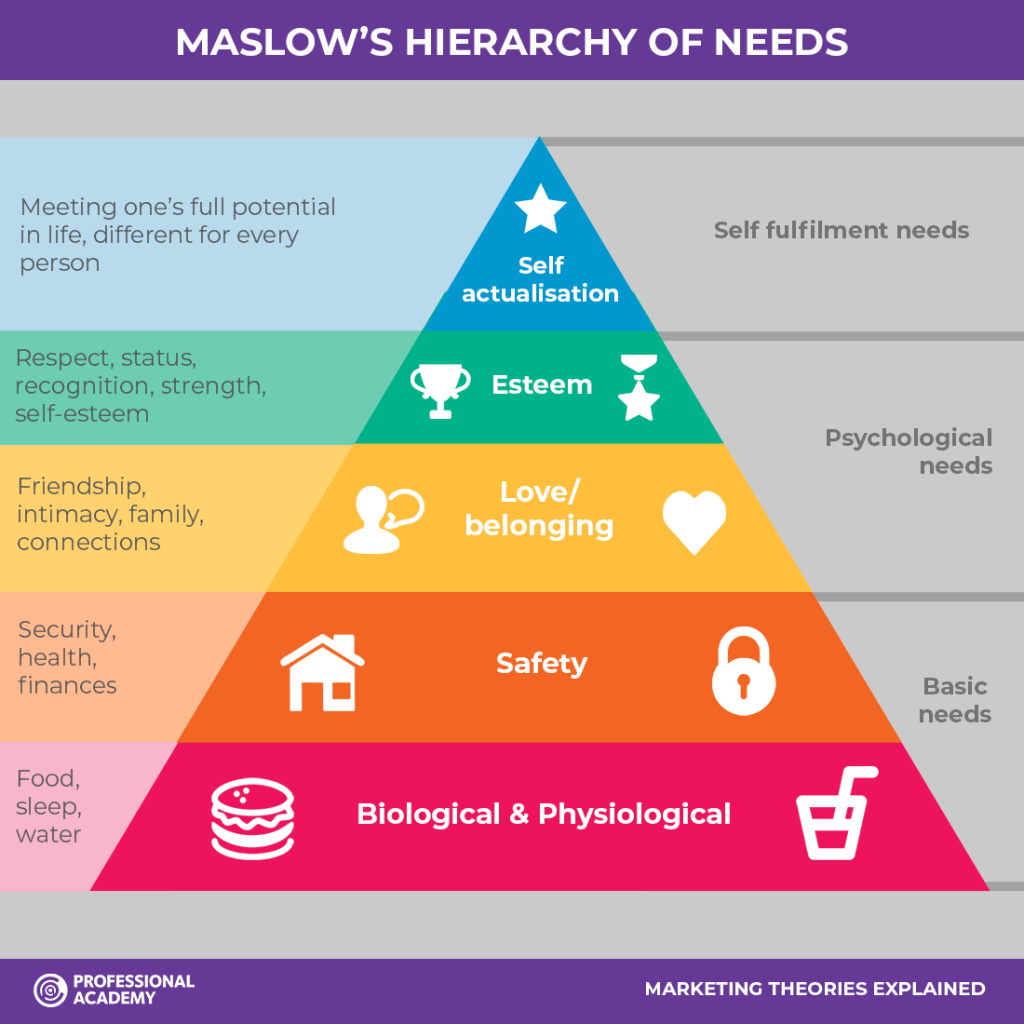
- What are your needs? Although Maslow’s hierarchy is not without it’s critics, it does offer a good model to assess how our intrinsic needs are being met. For example, does your diet provide sufficient quantity & quality for your needs, are you safe? These might sound like basic things that many of us take for granted in life but to many they produce a picture of the life circumstances that we find ourselves in and help to breakdown the problem into its components that we can then begin to try to resolve, one at a time.
- Exercise. This may well prompt some of you to dismissively sigh and wistfully think If only! But, research shows that exercise can be of real benefit in combatting depression and that effect is boosted further if you can get out in a natural setting like a woodland walk or park. However, I recognise that people who suffer with depression sometimes find it a major challenge just to get out of bed or complete daily tasks. The objective here isn’t to make anyone feel guilty about their level of ability. This something that you can do if your health permits it. Speaking as a sufferer myself, I find the 2 minute technique useful – I privately commit to trying something like exercise for 2 minutes. If, at the end of those 2 minutes I still feel lousy, I decide whether to stop or carry on. I find that once I’ve actually started, I can usually keep going. In short, do what you can.
- Develop a self-care plan. It’s easy to fall into the trap of neglecting your personal hygiene & care. It’s often not a conscious choice. All too often, depressed people feel too fatigued, lack the energy or simply don’t feel worthy of care. So, develop a self-care plan that identifies all the things you do to take care of yourself that help you feel better. It could be anything from taking a bath to getting a hair cut. We’re looking for any non-destructive self-care behaviour that helps.
- Develop a coping plan. This is where you get creative. Identify things you do in life that give you a lift. Whether that’s watching your favourite TV show, listening to certain music, the company of a good friend. Whatever it is that helps you feel better. However, try to keep the plan to constructive habits and steer clear destructive behaviours like drinking, abusing substances or self-harming. If these are a part of your current coping strategy I advise seeking professional advice to help you grow away from these destructive practices & develop new coping strategies.
- Tailor your plan. Have a plan for the bad days & a plan for the better days.
If you would like to talk about depression please get in touch with us at BroadMinds Therapy for a private & confidential conversation. You can reach us using any of the following contact details:
Phone: (+353) 0899420568
Email: hlpe@broadmindstherapy.org
Web: http://www.broadmindstherapy.org
Facebook: BroadMinds | Facebook

 Integrative Counselling And Psychotherapy