We all have ways of coping. Some are effective, some have a neutral effect – they neither help nor hinder, and some are simply self-defeating.
For example, we have all reached for the biscuits and had one too many, even though we know they aren’t exactly the most nutritious of foods. And perhaps, you’ve even felt a little guilty after doing so.
So, when do our eating habits become self-defeating, destructive, and take more from us than we gain?
Compulsion is one such line in the sand. Many of us hold on to the notion that addicts wake up each day and face a simple choice: To service their addiction or not. However, for an addict, servicing their addiction is not a ‘simple’ choice. Their experience of life is that they have ‘no’ choice: They must do whatever it is they feel compelled to do to service their need and if they don’t do so, experiences such as extreme anxiety and physiological symptoms of distress can arise.
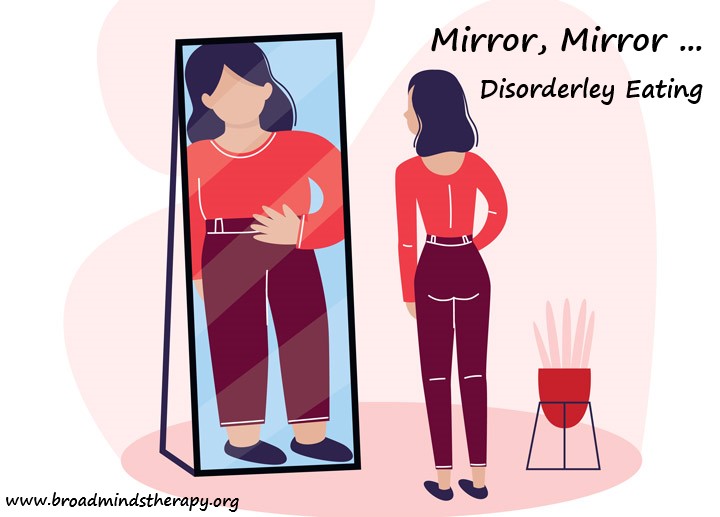
All of us eat in a disordered way, to some extent. Our eating habits can be irregular and don’t always involve strict adherence to a nutritional plan or healthy diet. However, there is a world of difference between a lack of regularity in our dietary habits and an eating disorder.
Bodywhys.ie describe an Eating Disorder as ‘A complex psychological disorder that effects every aspect of a person’s functioning’.
It may help to breakdown the way we think about disordered eating into it’s components:
Behavioural: Disorderly behaviours might include restricting food intake, overeating, bingeing, purging and associated behaviours that effect body image, shape &/or weight such as exercise.
Cognitive: The thinking style of the individual becomes very polarised, in common terms, very black & white, perhaps, all or nothing and such thoughts can drive the disordered eating.
Physical: What we eat impacts on our physiology. Disordered Eating habits will affect the body physically in one way or another. Body shape &/or weight might change, for example.
Emotional: Eating disorders have emotional components to them. They are often driven in the first place by emotional distress. Eating behaviours that result can cause further distress leading to further disordered behaviour and can lead to a negative spiralling effect.
What’s OK and what’s not?
Essentially this boils down to the question that if we all eat in a disordered way to some extent, how do we spot the signs of destructive behaviours developing into something more than feasting on a big bar of chocolate after a break-up?
The HSE list the following signs that you spot in others:
- Dramatic Weight Loss or Gain
- Dishonesty regarding food intake
- Dishonesty regarding weight
- Eating a lot of food very quickly
- Too much exercise
- Avoidance of eating with & around others
- Cutting food into very small pieces
- Eating very slowly
- Wearing baggy or loose clothing to hide weight loss or gain
You may also note the following signs in yourself:
- Worrying about food intake
- Worrying about your body shape & weight
- Avoidance of social events where food is involved
- Eating very little or far too much
- Use of laxatives or vomiting to purge yourself after eating
- Exercising too much
- Strict food habits & routines
- Mood swings & changes
- Feeling cold
- Tiredness
- Dizziness
- Digestive issues
- Excessively high or low weight
- Menstrual cycle disruption
The advice I offer is simple. If you have any concerns about your eating habits or those of someone else, get some advice on how to either approach someone you are concerned about, or consult a professional on your own eating habits & routines. A good place to start is with your GP, Doctor or feel free to give us a call. We’ll be happy to help.
Sadly, all too often, I’ve been relayed stories by sufferers and friends & families of sufferers about angry, shaming, or blaming behaviours that have done little more than made matters worse. Get some advice from a qualified professional and always, always be a source of compassion, understanding, love and support.
If you would like to talk about eating concerns or any other mental health issue please call 0899420568, email help@broadmindstherapy.org for a free, private, confidential & discrete discussion. You can also visit our facebook page https://www.facebook.com/jpbroad for more information.
Finally, thank you for taking the time to read this. Please like & share to help us reach & help as many people as possible.

 Integrative Counselling And Psychotherapy