In recent weeks we’ve been looking at the coping measures we sometimes use that can be very destructive to our lives. This week we turn our attention to Gambling.
Now some may not consider gambling to be a coping measure. Indeed, not everyone who gambles does so, problematically. However, it is a problem for a great many people and it would be a mistake to think that is an accident. Around 40% of people gamble regularly and 12% do so every week.
Gambling is a business that is maintained by returning customers. The design of their products is not just attractive, they are often designed to be addictive. The designs attempt to target customers and then keep them coming back to play a game where the odds are stacked against them, for the thrill of the challenge and the hope of a win. And many find that an occasional win is just enough to achieve that.
Despite all the tag lines about gambling responsibly & stopping when the fun stops, the industry is built for maximum profit, not social responsibility. Recent attempts by the government in the UK to require the industry as a whole to contribute more towards tackling problem gambling were met with collective stern opposition by the gambling industry. However, just one of the companies concerned did not feel such a lack of financial commitment when they paid an executive £421 million in 2020 and a further £300 million in 2021,
So where is the line between problematic gambling and ‘fun’?
Gambling watchdogs identify the following signs as potentially indicative of problem gambling:
1. Spending more money and time on gambling than you can afford.
2. Finding it hard to manage or stop your gambling.
3. Having arguments with family or friends about money and gambling.
4. Losing interest in usual activities or hobbies like going out with friends or spending time with family.
5. Always thinking or talking about gambling.
6. Lying about your gambling or hiding it from other people.
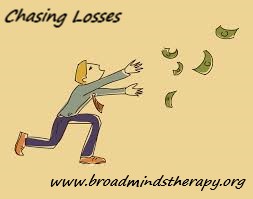
7. Chasing losses or gambling to get out of financial trouble.
8. Gambling until all of your money is gone
9. Borrowing money, selling possessions or not paying bills in order to pay for gambling.
10. Needing to gamble with larger amounts of money or for a longer time to get the same feeling of excitement or buzz.
11. Neglecting work, school, family, personal needs or household responsibilities because of gambling.
12. Feeling anxious, worried, guilty, depressed or irritable.
GamCare succinctly & concisely sum up an increasingly common picture of problematic gambling:
“Gambling problems and financial issues really go hand-in-hand. A financial crisis is often what brings a person to address their gambling. It’s also not uncommon for partners, friends or family members of problem gamblers to tell us that they did not realise their loved one was a problem gambler until there were serious financial consequences such as a court summons for non-payment of debt or repossession action on their home. And financial problems can really mount up. Bills don’t get paid, debts accumulate. If you have credit cards, you might max them out to pay your bills, or worse, to keep gambling. At this point, payday loans may look like a solution – but their high interest rates and charges are likely to make the situation worse. Business-owners can also find themselves in debt due to using business money to finance their gambling.
A common dilemma for someone with a gambling problem is how to get out of debt. For many, the chance to continue gambling in order to win it back and make everything right again can feel overwhelmingly tempting. It might also feel as though there is no chance of repaying debts accrued through gambling unless you carry on gambling, so you feel completely trapped.”
When The Fun Stops, Stop… The problem here is that by the time the fun stops, gambling may already a problem. And many gambling addicts will tell you that gambling itself is often fun, what isn’t fun are the consequences.
The good news is that help is available.
If these problems sound familiar to you and you would like to talk about gambling and mental health please contact BroadMinds Therapy for a free private, discrete and confidential conversation. Phone (+353) 0899420568, email help@broadmindstherapy.org or visit our web page to learn more: https://broadmindstherapy.org/2020/06/28/chasing-losses/
This month we’re offering a free consultation & a 20% discount on your first session.
There is no obligation to book further sessions and you are completely free to terminate therapy at any point of your choosing.
Get in touch before the end of October 2022 to book your consultation.
Quote the code: WMHD22 to avail of your discounted session and let’s see where the journey goes!
Finally, if you like what you read, please remember to like & share so we can reach & help as many people as possible.
Thanks for reading!

 Integrative Counselling And Psychotherapy