In recent weeks we’ve looked at some of the various things readily available to us for free that are often overlooked or misunderstood, and as a result, under utilised and so missing out on their great effect in boosting and maintaining our mental health.
This week I discuss the often dreaded notion of Exercise.
Before I lose you.. Let me be clear about what I mean by exercise. Of course, exercise can mean putting your trainers on and heading out the door for a run around the block. But it doesn’t have to!
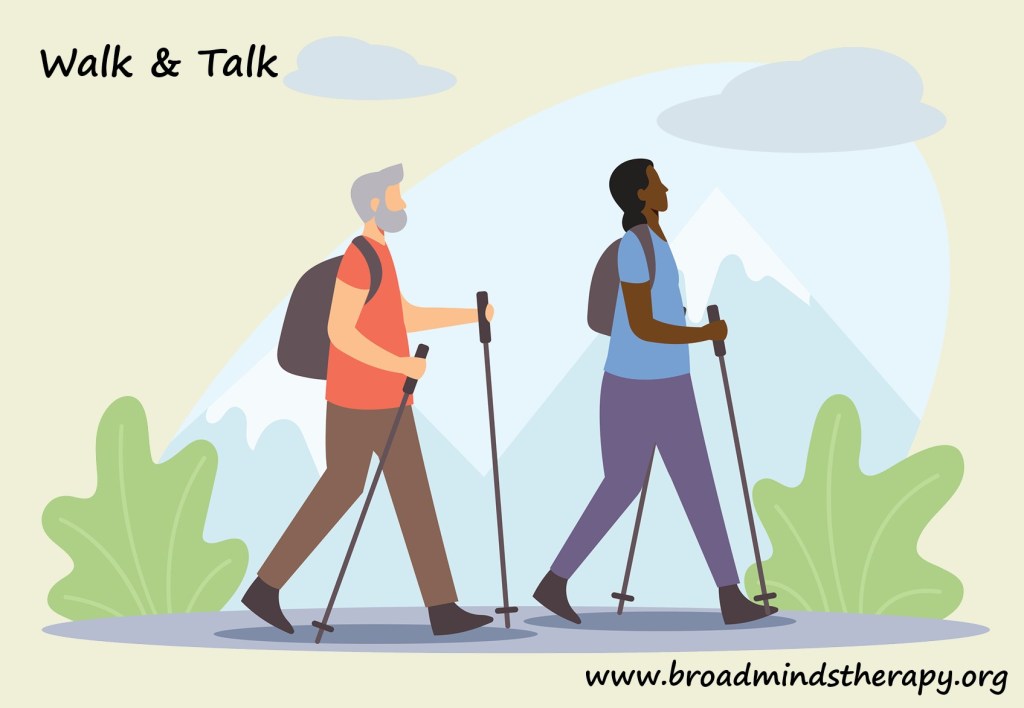
The word ‘exercise’ originates from Latin and came to mean the rough English translation of keep busy or practise. And this should guide our conception of exercise. Do what busies you & you find physically exerting. So, while it can mean running, cycling, swimming & the like, it can also mean less formal forms of exercising like gardening, housework, walking the dog, etc.. So you don’t have to become a gym-bunny to look after yourself in this way.
Find something fun and interesting that is also physically exerting and you are on the right path.
There are various ideas that cover why & how exercise is thought to work.
- Going Social: It’s not always the case but engaging in some kind of exercise often leads us to cross paths with others with a common interest whether it’s at the gym, on a park run, or visiting the garden centre to buy supplies, or perhaps even by joining online groups that reflect your interests; And connecting with others can be really beneficial for our mental health.
- Chemical Assistance: I don’t mean drugs. Your body naturally secretes all manner of hormones and chemicals, many of which are helpful in certain situations but not so in others. For example, when you are anxious your body secretes adrenalin & cortisol which are useful when physically preparing to deal with a threat. But these also linger around for quite some time before they are reabsorbed and can be a nuisance if we want to calm down. One of the best ways of invoking the reabsorption process is by physical exertion.
- Chemical Balance: Similar to that mentioned above, exercise can literally change the chemical balance within the brain & body. So, if you’re feeling down or flat, exercise can help to change the chemical balance, releasing the likes of dopamine in the brain which can help us feel a bit brighter.
- Perpetual Energy: Well not quite.. but while physical exertion requires energy, it can also help you to feel more energetic. Plus, the fitter you become, the more you will be able to exert yourself without getting tired. If you feel like you don’t have the energy to get started in the first instance, consider this: Studies show that if you make an effort to try exercise for 2 minutes you are more likely to continue beyond that first two minutes. It literally is about getting started. But even if, after 2 minutes you decide today it just isn’t for you, at least you’ve managed 2 minutes.
- Rise Up: Studies have shown that exercise can lift your mood and help fight mental health issues like depression.
OK, let’s assume that you’ve taken on board a few good reasons there to take exercise. But there’s more to it than that. For example, how do you decide how much to do and what is right for some isn’t necessarily so for others. So let’s take a look at current guidelines:
Moderate Exercise: Activity that gets your heart beating faster than usual and gets you breathing harder than you might normally experience.
Vigorous Exercise: Activity that gets your heart beating much faster and you breathing much harder than usual.
Ages 2 to 18: 60 minutes a day of moderate to vigorous exercise.
Ages 18 to 64: 150 minutes a week (30minutes x 5 Days) of moderate exercise.
Ages 65+: 150 minutes a week (30minutes x 5 Days) of moderate exercise with a focus on strength & aerobic exercise.
Now these are guidelines describing the minimums we should be aiming for but it’s always advisable to consult your GP before taking on a new exercise regime, particularly if you have any concerns about your health.
I hope that has clarified a few things for you. Above all, do what interests you – Exercise can be fun if you find the right fit for you. Keep it fun. Be brave & try out new things.
If you would like to talk with a professional counsellor& psychotherapist feel free to contact BroadMinds Therapy for help & advice. We offer a free consultation with no obligation to book further sessions. Call (+353) 0899420568, email help@broadmindstherapy.org , message us via this web page or visit our facebook page for more information.
Finally, if you like what you read please like & share to help us reach & help as many people as possible.
Thanks for taking the time to read this article.

 Integrative Counselling And Psychotherapy