
This week we continue considering how we maintain our mental health & build foundations for further personal growth.
Humans are built for & thrive on connecting with each other. It is considered an evolutionary imperative and it is thought be some that our Neanderthal ancestors may have been more intelligent than humans but the social instinct in humans meant that we were able to make use of our collective strengths that allowed us to endure while they faded from our shared existence.
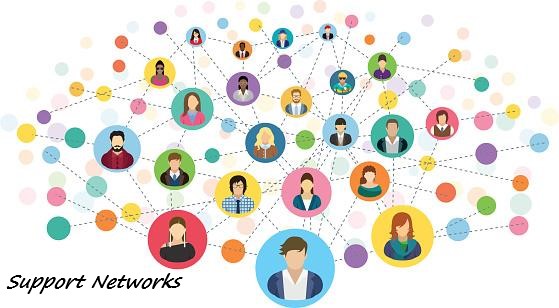
In some ways it’s a ‘two-heads are better than one’ concept that allows us to bring to bare a diversity of ideas, outlooks & strengths that offers us the chance to be greater than the sum of our parts. But it also something more…
After the iron curtain fell and the West began to explore the culture & society of the former Eastern block, doctors visiting orphanages in Romania noticed that the babies near the doors to the wards in which they were kept developed better than the other babies in the ward. It turned out to be the case that the orphanages were severely understaffed and it was often the case the babies near the door of had more contact with staff who would periodically poke their head through the doors to check in on the babies whereas other babies in the wards had far less contact with staff.
If, as the theory goes, humans have an in-built need for social interaction an immediate problem becomes apparent when we consider mental health. When our mental health deteriorates we often have a tendency to withdraw. Indeed, withdrawal from social engagement is a known symptom of mental illnesses such as depression & anxiety disorders.
Therefore it makes sense for us to consider how we relate to each other and see if we can build strong support networks with & for each other which not only promote our mental health, but that of those we connect with, too.
There are some fairly simple & free tricks we can use that cost nothing more than a little time, some paper and a pen.
- Step 1. Write down a list of the friends & family you you have in your life. This can be as extensive as you like but I suggest that to begin with you just include close friends and family. These are your Informal Supports.
- Step 2. Add to this list of people the people & organisations that offer support services available to you. These might include people like your Doctor or GP, your dentist, a Counsellor, etc. Any person or organisation that you have access to. These are your Formal Supports.
- Step 3. Add to each of these entries on your list their contact details, what sort of services they provide if they are formal supports, or what sort of skill & qualities they may offer if they are informal supports – skills & qualities like good listener, approachable, non-judgemental. Whatever qualities you think are important.
- Step 4. Grade each support on how good they are at offering the services or qualities & skills you feel you need. You choose the scale – I use 0 to 10.
- Step 5. The final step is to include details about their availability. For example, if your GP is only available during office hours, it may be no good trying to contact them outside those hours if you need to talk to someone immediately. The same applies to friends & family. Although it’s now easier to contact each other than ever before, we are not always available. For example, if someone is at work & cannot be disturbed while at work unless there’s an emergency, knowing their working hours is useful if information if you just want to talk & your situation isn’t urgent.
In case that all seems a bit wordy for you, I’ve included a file below that helps to bring that all together for you!
If you would like to talk with a professional counsellor& psychotherapist feel free to contact BroadMinds Therapy for help & advice. We offer a free consultation with no obligation to book further sessions. Call (+353) 0899420568, email help@broadmindstherapy.org , message us via this web page or visit our facebook page for more information.
Finally, if you like what you read please like & share to help us reach & help as many people as possible.
Thanks for taking the time to read this article.

 Integrative Counselling And Psychotherapy