Like other sciences and professions, sometimes the jargon used with psychology can seem a little obscure, perhaps even mystifying. Sometimes the language of a profession crosses over into common parlance which can be a good thing. Especially if, as is often the case, it promotes greater insight into our health. However, when that crossover happens, sometimes the explicit definition of a term is lost or diminished.
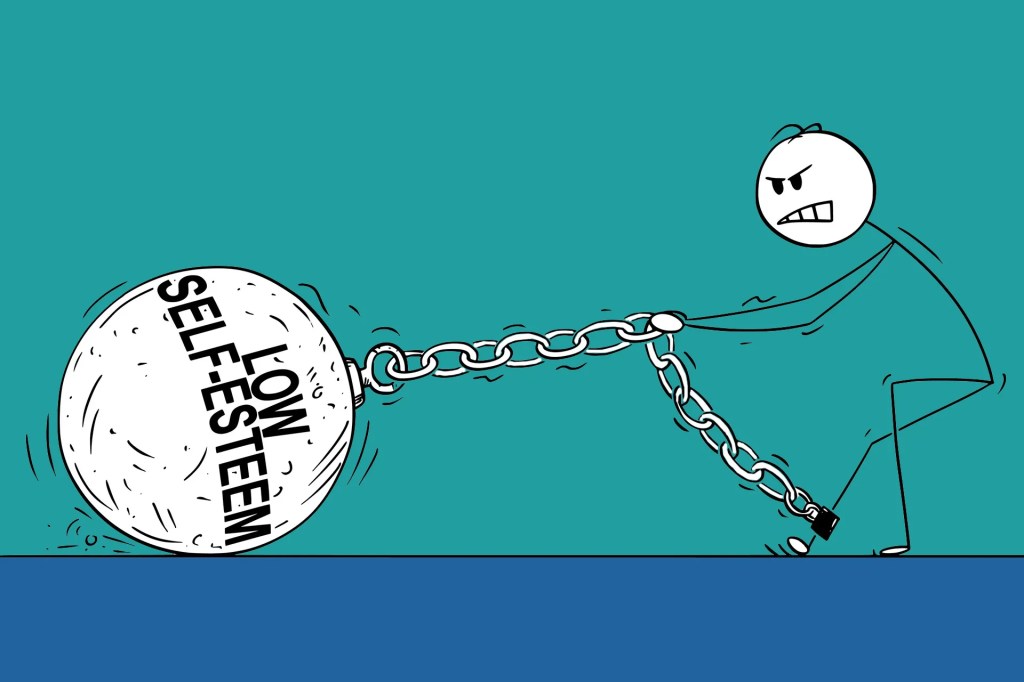
Self-Esteem is a term that fits that description well. It’s commonly used in public today. However, whenever I’ve heard someone use it and had the opportunity to ask them what they mean by self-esteem their confidence in using the term seems to drain from them, and they search for a definition as they try to offer me some kind of answer to my question.
So, let’s start by tackling that question: What is Self-Esteem?
Well, Self-Esteem describes your overall sense personal value & self-worth. In short, your own perspective and evaluation of your self-worth, your worthiness as a human being. It includes your emotional states and beliefs about yourself.
For example, whether or not you believe you are a good person, worthy of your own love & respect as well as that of others, and how this influences your feelings about yourself.
Those beliefs & feelings can be about specific things or a more global view of yourself.
Those beliefs might include such things as:
- I am a good person (Global).
- I am OK (Global).
- I am worthy (Global).
- I am attractive (Specific Attribute).
Emotions might include:
- Triumphant – May be specific to a particular event.
- Love – Can be Global or Specific to certain people.
- Fear – Usually related to a Specific stimulus or range of stimuli.
There are several reasons that self-esteem is important. These include but are not limited to:
- Self-Esteem has a huge effect on your experience of life. Your ability to experience lasting & more complete happiness & contentment in life is directly linked to your own thoughts & feelings about yourself. If you feel bad about yourself it’s hard to see how life can involve lasting joy.
- Levels of self-esteem are known to be linked to such as things as educational performance & achievement, criminality, ability to form & sustain well-functioning relationships, and resilience to adversity & anxiety.
- Low self-esteem has been linked to poor mental & physical health. People with low self-esteem are more likely to take less care of themselves and engage in self-destructive habits like substance use, smoking, unhealthy eating habits, drinking alcohol, and paying less attention to personal hygiene and basic needs. It is also linked to mental illnesses like depression & anxiety disorders. Low self-esteem can be linked to physical illnesses like heart disease and cancer.
What are the signs of low self-esteem?
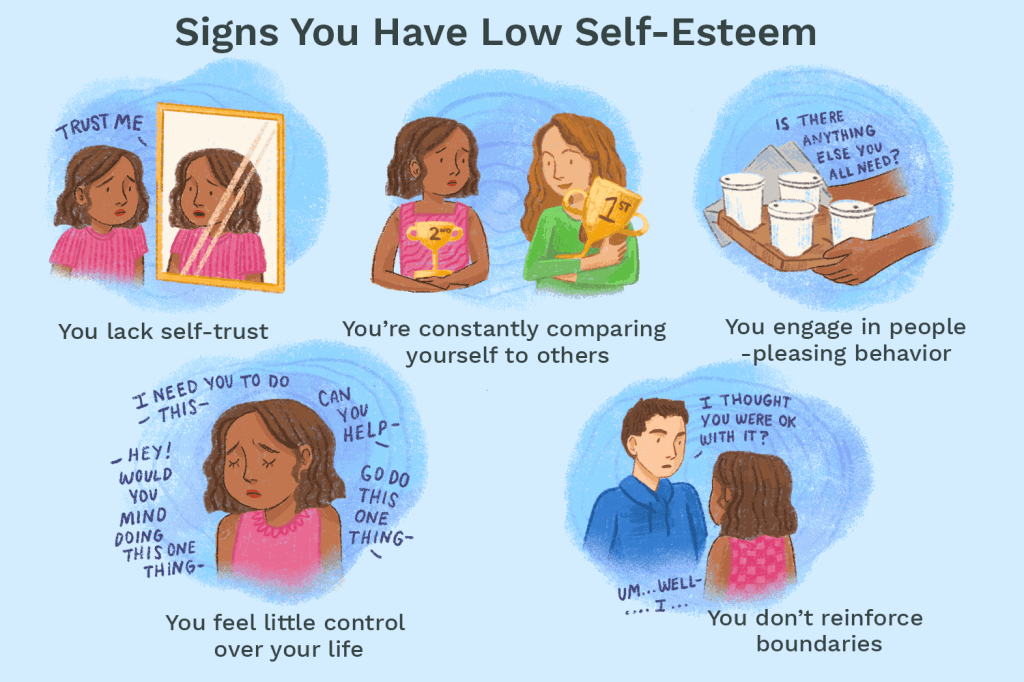
Just as having low self-esteem can affect your overall health in these ways, we can use these affects to our advantage in developing greater self-esteem. For example, the simple act of attending more to your personal hygiene and grooming can help to develop a greater sense of self-worth because it can convey the implicit message that I am worth taking care of.
Tips for improving your self-esteem:
- Be kind to yourself. How to..
- Self-Exploration: Start the journey of getting to know yourself better. This is about getting to know what really makes you tick, what makes you happy, what you value in life and about yourself; And explore your range of emotions. This doesn’t have to be costly or complex. A free & easy way to do this is to start journaling.
- Take greater care of yourself – This is simple, straight forward and most of us know how to do it. Eat a well-balanced & nutritious diet, limit alcohol intake, don’t abuse substances, get adequate rest & recovery. For more see our earlier articles covering Basic Needs.
- Notice your good points.
- Celebrate your successes and achievements.
- Make a list of your good points, the things you like about yourself.
- Ask others what they think are your good points, what they like about you.
- Don’t focus on negatives or give them too much weight.
- Develop a strong support network. This recognises the value of connecting with others & talking to someone when feeling distressed. It involves both formal & informal supports. Write down these agents in your support network and note information like their contact details, when they are available, what sort of skills & qualities they have. This will enable you to pick the best possible available option in any given situation when you feel you need to talk to someone.
- Formal supports include professional agents such as Doctors & medical professionals, therapists, support groups & organisations.
- Informal supports include friends, family, colleagues, for example.
- Engage with talking therapies. As with you support network, develop a list of options available to you that provides access to talking therapies available to you. A good counsellor & psychotherapist that you can forge a good professional relationship with is worth their weight in gold.
- Get creative. What interests you or is there any anything you’ve often thought you might like to try but never quite got around to? Try out a new a craft or skill, learn something new.
- Develop assertiveness skills.
- Know your boundaries with others and don’t cross them.
- Practise saying ‘no’.
- Limit how much you take on. Don’t over-burden yourself.
- Challenge yourself.
- Set yourself some SMART goals and break them down into the steps you need to take to achieve your goal.
- Reward yourself for achieving your goals, however big or small.
If you would like to talk, BroadMinds Therapy offer a free consultation during which you’ll get the opportunity to describe what’s on your mind & we’ll be happy to help you, either directly, or help identify the best options for you.
If you’d like to discuss Counselling & Psychotherapy for yourself or someone you know, contact BroadMinds Therapy and we’ll be happy to answer any questions you have and discuss options for you. Call 0899420568, email: help@broadmindstherapy.org , contact us via this website or visit our facebook page: http://www.facebook.com/jpbroad
If you like what you read please like & share to help us reach & help as many people as possible.
As always, thanks for taking the time to read this article.

 Integrative Counselling And Psychotherapy