The Christmas & New Year period is a time of celebration & indulgence, often over-indulgence, in all sorts of treats in quantities that would quickly affect our health if we sustained consumption at the same rate. It’s not unusual to hear of people making New Years resolutions including goals to lose some of the weight gained during the Christmas festivities.
For the most part, most of us know that we cannot continue consuming high calorie & high fat food at the same rate without bad consequences.
However, it is becoming increasingly clear that indulgences in some things have become more culturally acceptable while the consequences of these indulgences are often unknown, misunderstood, or often downplayed.
Alcohol has long been a favoured tipple over the festive period. The various forms of media are awash with even more adverts than usual encouraging us to buy and consume greater quantities, and sometimes asking us to enjoy alcohol responsibly. Whatever that means…
The bottom line here is that alcohol is toxic in any quantity to humans. The World Health Organisation describe alcohol as “a toxic & psychoactive substance with dependence producing properties”. From time to time the you’ll find articles in the media suggesting that a study has found some benefit to consuming alcohol but they are rarely balanced with information about the overall negative affects on human physiology & mental health.
If we park the prospect of dependence or addiction for the moment, drinking alcohol inhibits your ability to think & perceive clearly, slows down motor actions, and disinhibits behaviour – which is maybe why it can be fun to consume. However, it also significantly disrupts both quality & quantity of sleep which can have a huge impact on your ability to cope with the stresses the following day. Which is one of the reasons you may be more irritable and anxious the morning after..
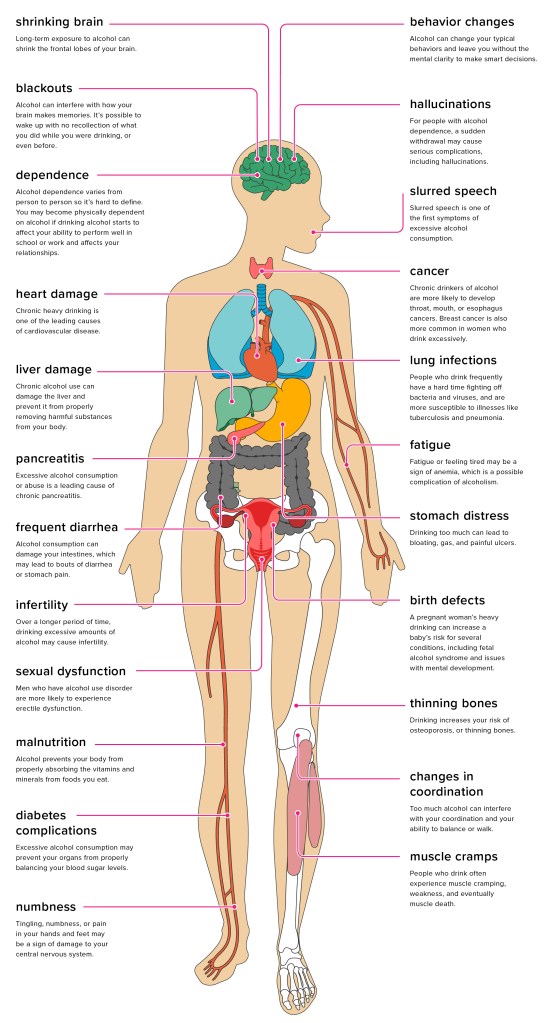
The long term impacts of consuming alcohol are widely known and accepted but also widely ignored by the ‘Don’t be such a bore!’ crowd. These include blackouts, higher risk of cancer, risk of developing dependence, heart damage, liver damage, lung infection.. See the graphic below for more information.
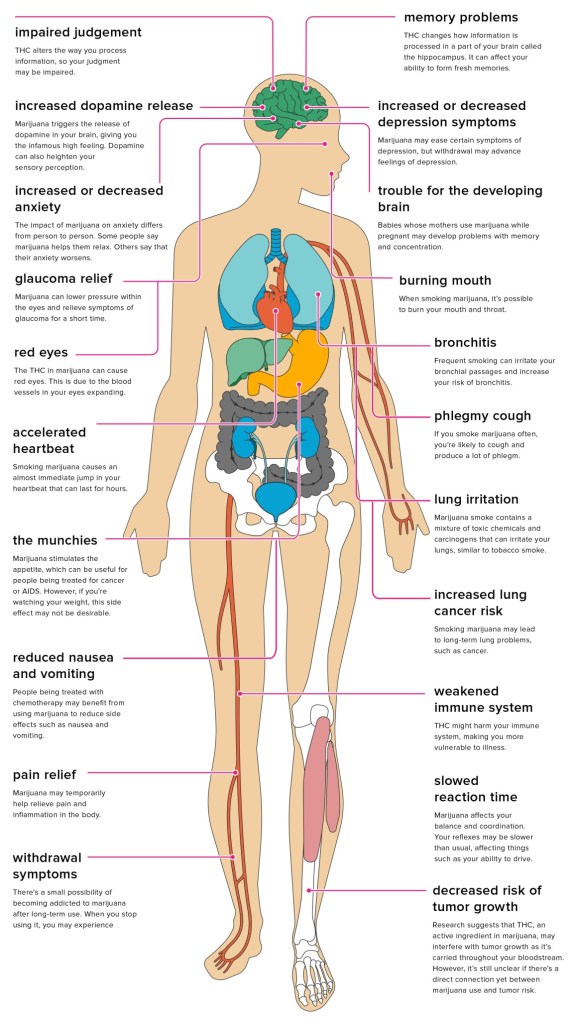
Cannabis – Ever heard the often used expression “It’s only weed!” ..? There is a popular belief that cannabis is largely harmless and the current trend for CBD products helps to perpetuate the notion, as does the constant calls for the legalisation of the product. I will not debate the merits of the legalisation argument but I will say very clearly that the notion that cannabis is harmless is at best a misunderstanding and at worst dangerously misleading.
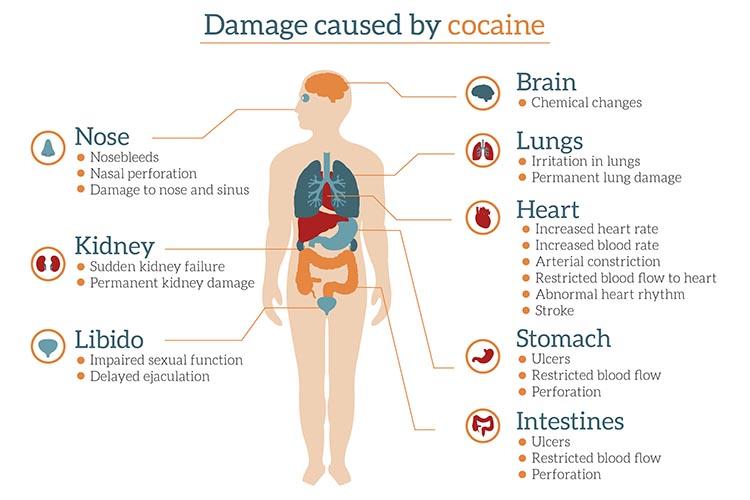
Cocaine use has become increasingly common – around 2% of Ireland’s population admit to have used cocaine within the last year. Perhaps it’s no surprise given that social anxiety is on the increase and there is a ready supply of a cheap drug that can help one feel more sociable. With its more common use has come the notion that It’s just a line.. and modern variation of the old phrase about cannabis use: It’s just weed!
Of course there are many more substances that can be & are abused regularly but I chosen to focus on these 3 because of the common usage and the current cultural attitudes towards them.
We can conclude from these brief summaries that these substances are not consequences-free in terms of your physical & mental health. The problem here is that the worst of the consequences often only reveal themselves after use over a period of time so the adverse consequences may not be experienced during or immediately after use. That allows time & space for us to doubt the influence of drug use on our physiology and psychology, and perhaps even come to believe that the warnings are somewhat overstated.
Add to that the reality that taking drugs can actually be fun plus the human phenomenon that causes people to dramatically underestimate the probability of bad things happening to them and you have a recipe for a perfect storm.
But it gets worse because these drugs are often used with other substances at the same time. For example, people maybe drink alcohol and use cocaine at the same time. The dangers here are compounded. The combination of using alcohol & cocaine at the same time can form Cocaethylene in the liver. This compound inhibits muscle activation – in other words they can stop working. That might sound like a fairly innocuous effect but when you remember that your heart is a muscle, you realise that cardiac arrest can literally be a heartbeat away.
In short, we’ll summarise by saying that if you feel you need any of these substances to have a good time, we’d encourage you to ask yourself the question why?
The Why is important because it tells you something about your mental experience of life. There’s no judgement here, just a genuine inquiry with the objective of helping you get the balance right between living a happy & healthy life. It’s up to you to decide where that balance is… although we invite you to contemplate that while you are sober.
If you need help with your mental health over the festive period BroadMinds Therapy are open every day apart from Christmas Day, Boxing Day/St Stephen’s Day & New Years Day.
Feel free to contact us at anytime using the following details:
Web: www.broadmindstherapy.org
Phone: (+353) 0899420568
Email: help@broadmindstherapy.org
If you like what you read, please like & share to help us reach & help as many people as possible.
As ever, take care of yourselves & each other. Have a very happy Christmas and thank you for taking the time to read this article.

 Integrative Counselling And Psychotherapy