
Don’t worry about it! It’ll be fine…
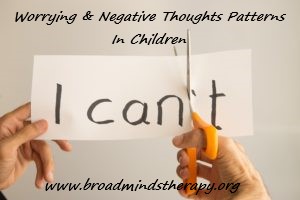
Well meaning & supportive words are easy to say but they don’t always have the reassuring effect they are intended to.
We all worry from time to time but some of us worry so much that it gets in the way of daily functioning. It can disrupt our sleep, our stress levels, distract us when we need to focus & concentrate, and adversely affect our remember things & rationalise. And, as we discussed in our last article, Kids really do worry about things, even if we think they don’t.
Worrying can be triggered in all sorts of ways, some of which were outlined in our last article. But it can also become a way of life if we’re not careful. So how do we help our children develop the skills needed to cope when they are worried about something, and worry less in the first instance?
- Identify Negative Thoughts & Thought Patterns. These take several forms:
- Exaggerating bad experiences or events.
- Extending those experiences for longer than appropriate.
- Self-blaming for things beyond their control.
- Generalising: Proposing that a bad consequence or event is what always happens in certain circumstances.
- Anger & frustration with oneself.
- Staying in comfort zone: Reluctant to try out things that they are not sure they will perform well at.
- Thinking that bad things always happen while good things are rare.
- Intolerance of mistakes.
- Being a bad loser in games.
- Intolerance of disappointment.
- Often defeated at the sight of the first obstacle.
- Distinguish Between Positive & Negative Thoughts: It’s not easy for adults, with all their worldly experience, to identify the difference between positive & negative thoughts when you find yourself worried about something. After all, your focus is on whatever it is you are worried about! Imagine then, what it’s like for a child who doesn’t have the experience & skills of their parents, family, teachers, etc, to draw on when something is bothering them.
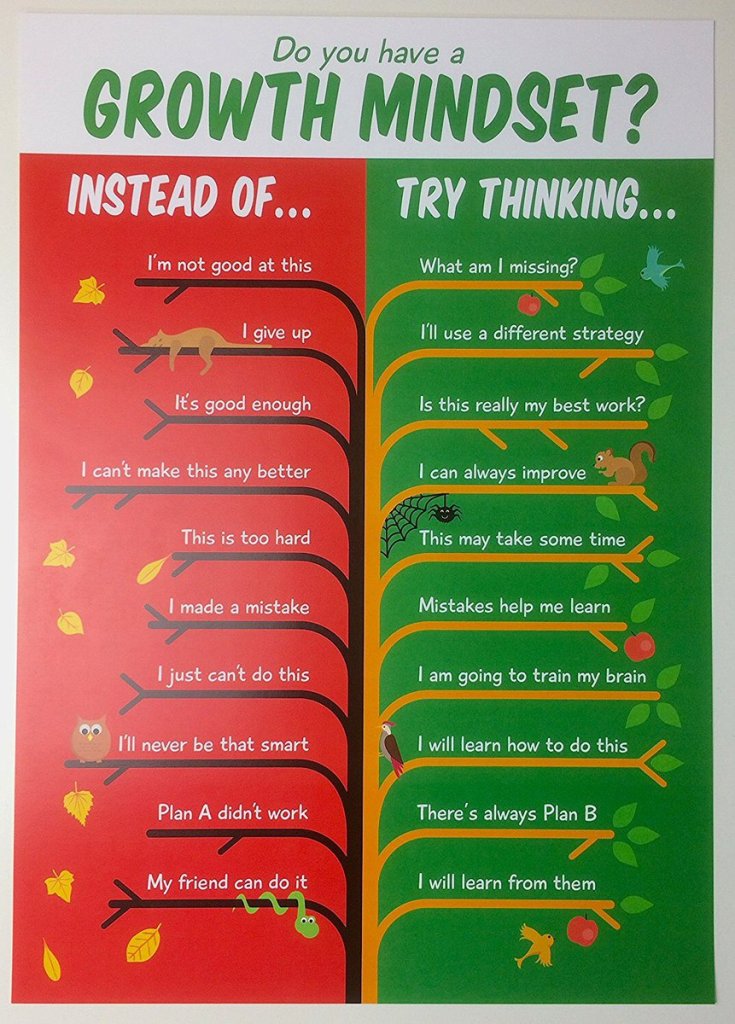
What is needed here is a way to identify between the two and develop a Growth Mindset. In case you don’t have one of laying around, here’s a handy chart for you to help with that!
You can also get creative and use your child’s toys to play a game where one toy represents the negative thoughts & the other represents alternative positive thoughts. The child is then ask to attribute thoughts to each of the toys at which you provide some help & guidance. This will help develop emotional literacy as well as provide a platform for the expression & discussion of troubling thoughts.
3. Develop Optimism. We all accept that sometimes things don’t work out how we had hoped. However, how we deal with set backs and failures can make a huge difference to overall outlook in life. Accepting disappointment & failure as opportunities to reflect and learn transform our negative experiences to positive & constructive experiences. The Growth Mindset diagram above shows how we can reframe bad experiences and the negative thoughts they can evoke and choose alternative outlooks that, over time, will inform our belief systems.
This mindset has the power to transform: “I never have any luck with this. This always happens to me.” to “I tried hard to get this right. What can I learn from this and how can I change my approach to get a better result?”
With practise, these belief systems operate like mental filters through which we process & digest our experiences. Once we’ve got this far with our growth, we are transformed into optimistic, positive & constructive people who can exploit all life’s experiences for the benefits they hold and avoid getting weighed down with pessimism and negativity. Hopefully you will not only be a happier-chap but you will have the power to lift others around you.
To practise with your children, come up with 4 or 5 tricky situations that they might experience in life and challenge them to imagine a response that promotes a growth mindset. Then review together what they’ve come up with, how they got there, and see if it can be improved any further.
As I’ve said in previous & recent articles, family dynamics & helping our children get back to school after the summer holidays aren’t in themselves mental health issues, but they can have a huge impact on our mental health. Finding more effective ways to manage those factors & transitions can be very helpful in managing our mental well-being.
If you would like to talk, BroadMinds Therapy offer a free consultation during which you’ll get the opportunity to describe what’s on your mind & we’ll be happy to help you, either directly, or help identify the best options for you.
If you’d like to discuss Counselling & Psychotherapy for yourself or someone you know, contact BroadMinds Therapy and we’ll be happy to answer any questions you have and discuss options for you. Call 0899420568, email: help@broadmindstherapy.org , contact us via this website or visit our facebook page: http://www.facebook.com/jpbroad
If you like what you read please like & share to help us reach & help as many people as possible.
As always, thanks for taking the time to read this article.

 Integrative Counselling And Psychotherapy