
Maybe you are working from home and the distinction between home and office has become so blurred you are unsure where the line is anymore.
Perhaps you are still required to go to work as usual. Maybe your job exposes you to increased risk of Coronavirus transmission & infection. I can’t imagine what it must be like to work in physical healthcare at the moment where the need to get up close & personal with people, perhaps people with Coronavirus, having to witness all the death & suffering, all the while knowing that you could be next or infect your family when you return home.
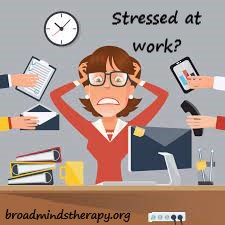
The ‘New Norm’ has presented us with many challenges over the last year or so. For many, one such challenge is work related stress & anxiety.
Your employer has a duty of care for you & is legally committed to compliance with health & safety legislation.
However, you are also expected to comply with this legislation in contributing to your own health & safety at work. In short, you need to look after yourself.
So how can you help manage your own work related stress & anxiety?
Mental health charity, Mind, offer the following advice:
- Make sure you take your full lunch break. It’s OK to go the extra mile ocassionally but if it becomes a daily endeavour it can become an expected norm.
- Maintain clear boundaries between work and home – try not to check emails. The Right to Disconnect has gained recent traction in the media with a new code of conduct taking effect from April 1st. This gives employees the right to refuse to routinely work outside of normal hours and not incur a penalty in any way for doing so.
- Start a clear to-do list so you stay organised.
- Use time on your commute to wind down, by listening to music or reading.
- Ask for help if your workload is out of control or you don’t have the skills or resources to complete a task.
I would add the following:
- Work your hours. Don’t make a habit of working outside of your contracted hours. It’s OK to be flexible but if doing extra becomes the norm you could be harming yourself and affecting personal relationships.
- Consider discussing issues around stress & anxiety with your employer. They can’t help if they don’t know you are struggling!
- Put any concerns you have in writing. If you do decide to discuss you concerns with your employer, by all means have a verbal conversation but also put them down in writing. This may come in useful if your employer fails to adequately support you and the very fact that there is a record of your discussion may give them a little more encouragement to act accordingly. (Email is a great channel for this.)
- Ask if your employer has an EAP scheme. Some employers have an Employee Assistance Programme which may offer counselling for a range of issues including work related stress & anxiety.
If needed, consider discussing your issues with your Doctor, a counsellor, or even a trusted friend or family member. You’ll be surprised how much sharing a problem can help.
If you feel like professional counselling may help, BroadMinds Therapy offer a free, discrete, private & confidential consultation. Just give us a call on 0899420568 or email help@broadmindstherapy.org
See our facebook page for further information & updates: BroadMinds | Facebook
As ever, thanks for taking the time to read this. If you like what you read, please remember to Follow, Like & Share to help us reach & help as many people as possible.

 Integrative Counselling And Psychotherapy