
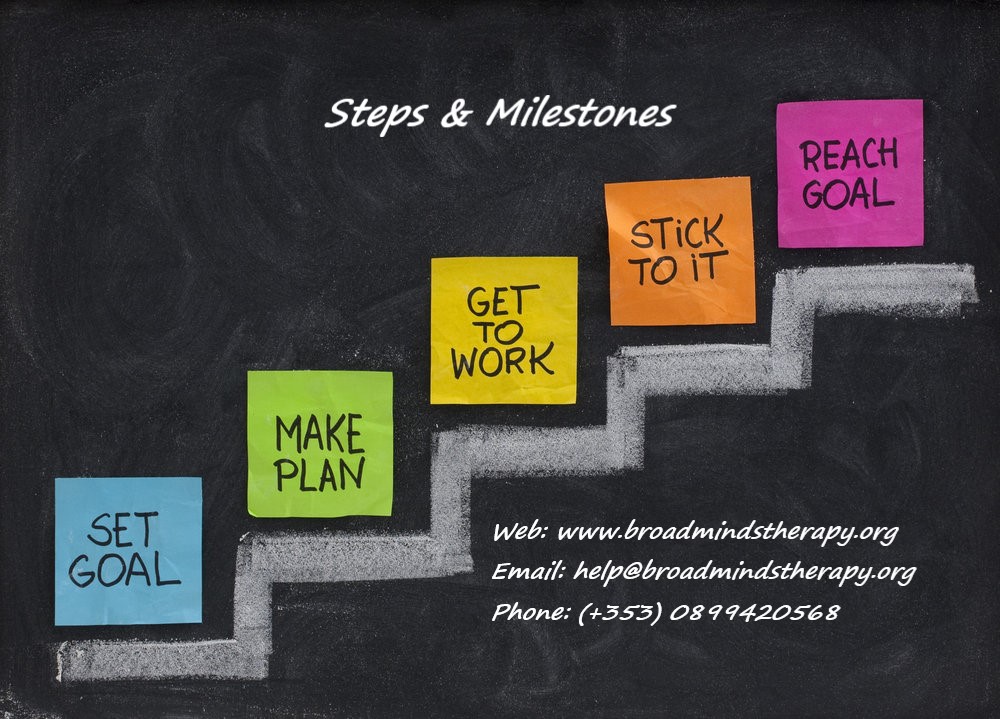
This is a tough week: We’re getting back into the swing of things after the Christmas & New Year period. Maybe feeling a little reluctant to get back on the treadmill but hopefully that’s tempered by a new enthusiasm for a better future in which our new hopes & dreams seem possible.
Hopefully by now you’ve taken a look at the changes you want to make & identified some SMART goals to work towards. If not, but change is something you desire, then I invite to take a look at our last couple of posts for some tips & pointers.
The next step is to work out how we build momentum with our changes and form new habits. Some studies suggest that it takes anywhere between 18 & 254 days for new behaviour to become habitual… Wow!
That’s quite a spectrum and you could figure anywhere along it so we need a plan to build momentum with our new behaviours or we could find ourselves quickly falling back into old habits. 80% of New Year’s resolutions falter by week 6, so what do we do to try to make sure we’re not one of those statistics?
A simple & effective model of change for our behaviours is the Kurt Lewin model which is comprised of 3 stages: Unfreeze – Change – Refreeze.

Imagine that you are an ice cube that wants to be a different shape. That desire is like the change you want to make the new the shape is the goal. To achieve that
Here are 3 techniques which help to form our overall strategy:
Steps: These are stages of our methods in trying to achieve our goal. So far we have used the example of trying to lose 10 kilos so I’ll continue with that, although these techniques can be used with any goal.
Step 1: Breakdown the goal into smaller goals by identifying milestones (see below).
Step 2: Think about how you are going to measure what & when. Constantly weighing yourself to check on your progress will probably only leave you disheartened because weight loss is usually a slow process and you will weigh differently at different times in the day. Pick a weigh-day & time, once a week & stick to that.
Step 3: Identify what activities & behaviours you are going to change or adopt to effect your goal. Continuing with the weigh loss example, you might choose a combination of exercise & nutritional discipline.
Step 4 is to plan out each of these changes. For example, if you’re thinking of taking more exercise, think about how & when and make sure that your plans are realistic & achievable. There’s no point in planning to exercise for an hour every day if you don’t have the time or the current fitness levels to sustain that. If you’re planning to diet, plan what you are going to eat & when, ahead of time, and stick to that plan as best you can. Think back to the SMART technique. Similarly with your diet: Identify what you can change and focus on those changes. Keep it Realistic & Achievable!
Step 5: Talk to others who have tried to achieve these goals before. Don’t just talk to those who have succeeded. Also talk to those who have tried & failed. This will give you some idea of what has worked for others and what didn’t. That doesn’t mean that these measures will work out the same for you but it does give you some insight and an opportunity to learn from the experiences of others.
Step 6: Take responsibility for the change. Don’t fool yourself by making excuses. If you really want change you can achieve it, but it takes effort and persistence.
Milestones are the markers you identify ahead of your change which together add up & lead the way towards achieving your overall aim. For example, if you are planning to lose 10 kilos in 3 months, you might aim to lose 3.5 kilos every month or 1 kilo a week. Each of these is a milestone which leads the way towards achieving your overall aim.

Rewards: Identify some rewards that you desire ahead of achieving your overall goals & milestones on the way. So, for example, if you are planning on losing 10 kilos, you might promise to buy yourself some new clothes if you achieve that goal, or some dinner with family or friends. You choose the reward! It's your reward so pick what you want but it needs to be meaningful to you. However, you need be strict with yourself - if you don't achieve your goal, you don't get the reward. In this way, the reward serves as a motivating force.
Next up: How to maintain the momentum.
If you would like to talk about goals, making life changes or any mental health issue, BroadMinds Therapy remains open & ready to help. You can reach us using any of the following means:
Web: www.broadmindstherapy.org
Email: help@broadmindstherapy.org
Phone: (+353) 0899420568
Facebook: www.facebook.com/jpbroad
Finally, if you like what you read please remember to like & share to help us reach & help as many people as possible.
Thanks for taking the time to read. Happy New Year to you.
Take care & stay safe.

 Integrative Counselling And Psychotherapy