
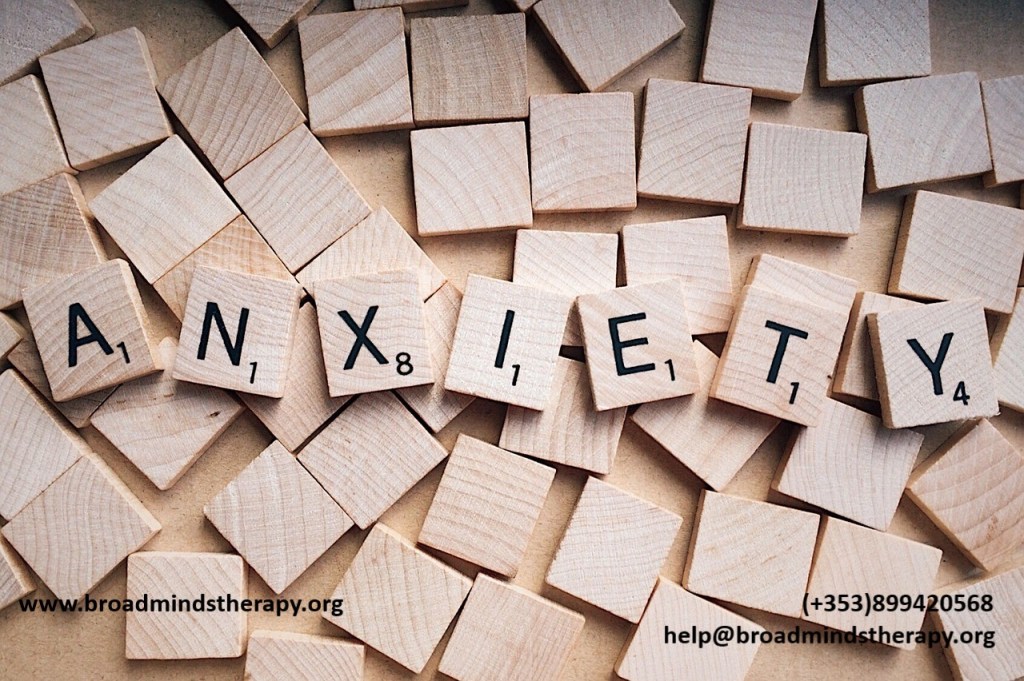
In this case, ‘A’ is for Anxiety. How do you cope with yours?
If you like a stat, it’s thought that around 1 in every 8 of us struggles with our anxiety. There are no concrete figures on this, partly because many people suffer in silence and just try to somehow get long. The sad fact is that getting along could be a lot easier if these people got suitable help.
You won’t have to look far to find a broad range of self-help books often built around quick-fixes or life-hacks which often infer that our complicated lives can be made a lot easier, very easily. Some of this material is useful. Some not so and sorting the wheat from the chaff isn’t easy. I guess my question is, if you were physically unwell would you go to the library or the bookshop? Probably not… so why apply that strategy in dealing with your mental health?
By all means seek to be better informed but you will not find a book on the shelf that beats help from professional healthcare.
Anxiety is considered to be a primitive evolutionary development that allowed humans to perceive danger and act to protect itself. You may of heard of the fight or flight instinct.. This is your anxiety process kicking in. When a threat is perceived a cascade of hormones wash through the body preparing it to deal with the threat and in this way it is a life-preserving instinct. However, the days have long gone when the threats our primitive ancestors faced are a problem for us. But we can & often do perceive modern problems as threats, like relationship problems, job insecurity, shopping, among many other issues; And sometimes, seemingly mundane situations like standing in a queue at the supermarket, can trigger this process, too.
It’s not unusual for people to feel a sense of shame or embarrassment about their anxiety and delay seeking help as a result. Sometimes people naturally overcome their anxiety issues but all too often they just try to struggle on, regardless. Left untreated anxiety issues can lead to phobias, depression, compulsive disorders, & physical illness, and the list goes on. Just to make things more complicated, anxiety can also result in physical symptoms suggestive of physical illness or injury but in actual fact are purely psychological.
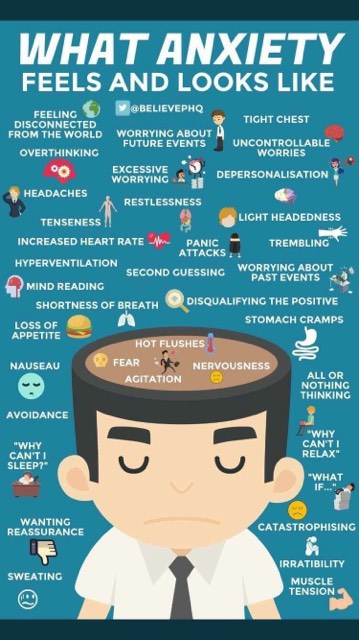
However, It is not advisable to assume that physical symptoms have a psychological origin and you should always seek medical advice about physical symptoms.
Don’t underestimate anxiety. It can really get in the way of every day life. But you probably know that already..
If you’re struggling with anxiety related issues or supporting someone with one you maybe thinking What can I do?
Here are my tips:
- Immediate safety is always the number one priority. If you are considering self-harm or feel suicidal then the emergency services should be called as soon as possible.
- Consider getting some professional advice.
- Consult your Doctor and be sure to explore all physical symptoms.
- Consider exploring your experiences with a Counsellor or Psychotherapist. Talking therapies are evidence based and can be really helpful in dealing with the cause as well as helping you develop greater resilience to future stresses.
- Identify & develop your support network. Think who you can call on when needed, who is helpful & in what circumstances. Also consider who is available & when. By drafting this out on paper or digitally, you can refer to it when needed & identify the best possible helper at that time & in those circumstances.
- Develop a self-care plan. This should include all the things that help you feel better as well as the things that you need for basic functioning. So things like eating a well-balanced diet, attending to personal hygiene, getting enough sleep & rest, and taking regular exercise; It might also include things like your favourite music, TV, film or arts & crafts. Don’t forget to assess your overall lifestyle.
- Slow down. Western societies are obsessed with productivity. Life can feel like a never ending rush to get everything done and tend to all your responsibilities. The chances are that you have more time than you realise and that some of the things you think are important are actually not & serve only to make life harder. Slow things down a bit & learn to engage with what you are doing more mindfully. You will notice things about your experiences that had passed you by before. You will hopefully eventually be able to achieve a fuller experience of life in the present moment and you may also get to know your triggers better so you can develop better responses as well as proactive measures to combat them.
- Put your phone down. Your life is not going to be improved much by endlessly scrolling through the news or social media. In fact, it’s more likely to make you more anxious. Your phone may bring you closer to people far away, but it can also take you far away from the people who are with you.
If you would like to talk about coping with anxiety, whether it be for yourself or someone you know, feel free to contact BroadMinds Therapy for help & advice. We offer a free consultation with no obligation to book further sessions. So what have you got to lose? Call (+353) 0899420568, email help@broadmindstherapy.org , message us via this website, or visit our facebook page http://www.facebook,com/jpbroad for more information.
Finally, if you like what you read please like & share to help us reach & help as many people as possible.
Thanks for taking the time to read this article.

 Integrative Counselling And Psychotherapy