
With COVID19 cases on the rise and many areas experiencing additional lockdown measures, now seems like a good time to check-in with each other & ourselves to see how we’re coping and look at some easy measures we can take to help with the stress & anxiety of it all.
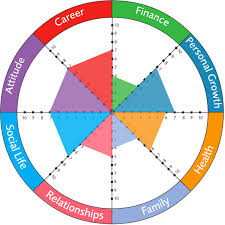
- Evaluate Your Own Stress & Anxiety Levels: A handy tool for this is a wheel exercise. The idea is that you give each category a score and see what size & shape your wheel is when you’ve completed the exercise. If your wheel is nowhere near round that suggests that there are some issues in your life to consider addressing – that things are a little off-balance. If your wheel is very small because you achieved a low score in each category, this could mean that most areas are in need of work. Whatever size & shape your wheel is, the good news is that it points you in the direction of the things you could be working on to achieve more manageable stress & distress levels.
- Develop A Self-Care Plan: This is about thinking about what you need to maintain your physical & mental health when things are good and have a established & effective plans in place for the bad days. This covers the full range of human experience: Physical, Emotional/Psychological, and Spiritual.
- Body – Physical: Healthy Body, Healthy Mind!
- Exercise – There’s an enormous body evidence supporting the idea that regular exercise is great for supporting your mental health. And if you can exercise in the open, out & among nature the positive effects are boosted.
- Nutrition – What we eat & drink effects our bodily function & moods. Alcohol is a great example of that. But there are foods that are known to be great for our mental health, rather than bad, as with alcohol.
- Personal Hygiene – Those struggling with their mental health sometimes struggle with personal hygiene. There are many possible reasons for this ranging from lack of motivation to feeling like you’re not worth taking care of. Are you taking care of your hygiene needs?
- Physical Health – Do you experience pain or discomfort in your body? Do you feel unwell or maybe that some things aren’t working as well as they could be? Consider seeking medical advice.
- Mind – Psychological: It’s common to find people taking care of themselves physically. They may take regular exercise, watch what they eat, visit the Doctor if they feel unwell. Even visit places like spas for a little pampering. But how many of us pay attention to our psychological well-being and have a clear idea of how we can look after our mental health? Maybe it’s because our minds can seem mysterious and intangible. Somehow, we find ourselves in the ironic situation of being acutely aware of our minds every minute of the day and yet understanding it can feel a little like feeling your way in the dark. So where do we start?
- Support – What supports do we need to help us recover & maintain our mental well-being?
- Consider sharing your thoughts & feelings with trusted friends & family. Together you will learn to support each other in a mutual & reciprocal way.
- Consider the skills, qualities and resources of each confidante and turn to the best candidate, most likely to be helpful.
- Beliefs – Identify your core beliefs. You may think these serve you well but take the time to reflect & review. For example:
- If you think that sharing your troubles is akin to burdening others with your problems, ask what’s behind the term ‘burdening’? Perhaps you think that your troubles aren’t worthy of the time & interest of others, or perhaps you feel that sharing makes you feel vulnerable, or you worry what others will think.
- Where do these beliefs come from? Sometimes the beliefs we hold dear are not our beliefs at all, but those of others that we’ve adopted and it’s only when we question our commitment to them, that we realise the fragility of their foundation. Conversely, looking more closely at our core beliefs can strengthen our faith in them as we understand them more completely.
- Learning – What have we learned from our experience of therapeutic introspection?
- Life can be complicated and busy. Sometimes basic principles like breaking down the problems we have into its various components and tackling each of those one step at a time, get lost on us as we grapple with the multitude of stresses we endure.
- Spirit – Emotional: The human experience is a felt experience. We like to think of ourselves as logical people who make rational decisions – and sometimes we do – but if we look more closely, we’ll see that we are often motivated by our emotions. We do what we think will make us happier. We eat what we like, not necessarily what’s good for us. We socialise & work best with people we are able to connect with. Perhaps the most valued human experience of all is that of being loved & loving. It’s not surprising, then, that our emotional well-being is critical for happier experience of life.
- Awareness – To work on our emotional well-being it helps if we have a deeper understanding of how we currently feel. Tips for improving our emotional awareness include:
- Time – Give yourself time to think & focus on your feelings. Ask yourself:
- How do I feel?
- Where do I feel it?
- Do I want to feel this way?
- How do I want to feel?
- Guided meditation & deep relaxation exercises.
- Practice mindfulness techniques to develop a greater awareness of your experience in the present moment.
- Time – Give yourself time to think & focus on your feelings. Ask yourself:
- Emotional literacy – Name your emotions. Focus on them and explore what they feel like and why.
- Emotional geography – Where do you feel it? Run through a body scan and see if you notice any physical manifestations that you perhaps weren’t aware of. For example, during periods of stress we sometimes hold a lot of tension in our facial muscles which can go unnoticed.
- Awareness – To work on our emotional well-being it helps if we have a deeper understanding of how we currently feel. Tips for improving our emotional awareness include:
- Support – What supports do we need to help us recover & maintain our mental well-being?
- Body – Physical: Healthy Body, Healthy Mind!
- Action Plan: You’ve given some thought about Body (Physiology), Mind (Psychology), & Spirit (Emotions) in terms of how well you look after yourself and noted any changes you’d like to make. But let’s not stop there! Let’s plan for the change you want and give your goals the best chance of becoming reality. Plan to feel how you want to feel. This involves identifying the things that trigger unwanted & desirable feelings and planning how you will cope. For example, your plan might include:
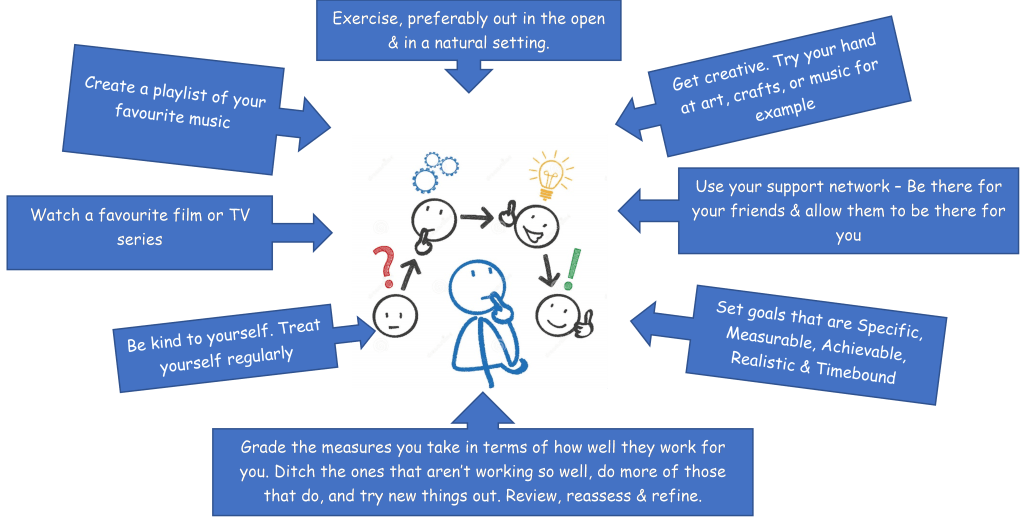
4. Stay connected: It’s never been easier to stay connected with the people we know & love and it’s important that we use the means available to us to keep up the social contact we would have had under normal circumstances. However, I think we can take it one stage further: I recommend writing a list of the friends & relatives that you are usually in regular contact with as well as any other professional support services you might use, such as a Doctor or therapist. Then think about the qualities & skills each person has. Some people will be good to talk to about certain things but may not be so good at other things. For example, if you have a friend who is very good at listening while another is better at talking, you might be better off calling the first friend if you need to get something off your mind. Then, think about who is available & when.. If you need to talk to someone during the day but the ideal person is unreachable then you need to consider whether you can wait until they are available or consider your next best option. You should end up with a refined list of supports that is optimised for your needs. But remember that you also need to be there for others, too.
This doesn’t have to simply be a Coronavirus coping plan. You can use it anytime but with the added challenges we all face at the moment, it’s a good idea to give some serious thought to maintaining or improving your mental & physical health. Prevention is better than cure.
If you would like to talk about coping mentally, whether it be for yourself or someone you know, feel free to contact BroadMinds Therapy for help & advice. Call (+353) 0899420568, email help@broadmindstherapy.org , message us via this website, or visit our facebook page http://www.facebook,com/jpbroad for more information.
Finally, if you like what you read please like & share to help us reach & help as many people as possible.
Thanks for taking the time to read this article.

 Integrative Counselling And Psychotherapy