Following on from our last post on alcohol, in this post we’re taking a closer look at the effects of alcohol on our physiology.
There are several types of alcohol. Ethanol is the type commonly bought in shops, bars & restaurants. However, alcohol distilled at home can take the form of methanol which can cause blindness. All types of alcohol are toxic to the human body. It’s the size of the ethanol molecule that helps it to be so easily absorbed by the body. Once consumed the drink travels through the stomach, a blood vessel rich environment where about 20% of the alcohol consumed is absorbed into the blood stream. It then moves into the small intestine, another blood vessel rich environment where the majority of the remaining alcohol is absorbed into the blood stream. A process known as equilibration begins, involving the blood stream distributing the alcohol fairly evenly throughout the body. However, the greater part of the blood first goes to the brain which is made of a fatty material which can absorb alcohol & so for a while alcohol concentration in the brain can be higher than that in the blood stream. It’s the effect of alcohol on the brain that results in intoxication.
The size of the ethanol molecule enables it to imitate certain neurotransmitters that interfere with normal brain chemistry. In small quantities, perhaps that first socialising drink, it is able to imitate Gamma Aminobutyric Acid (GABA), a inhibitory neurotransmitter which calms the receptive cells in the brain, while decreasing the activity of glutamate receptors which are responsible for exciting the nervous system, reducing experiences of stress, anxiety & fear.
As the quantity taken increases it begins to imitate dopamine, the main chemical in the reward centres of the brain, which gives us the ‘feel good’ factor and the loosening of inhibitions. This is thought to be behind the drive to drink more, essentially chasing that feel-good factor. In larger quantities, ethanol molecules start to block neurotransmitters which can inhibit normal physiological function and in larger quantities still, can block the neurotransmitters that control & regulate essential bodily functions like heartbeat. When quantities are taken at this level, brain chemistry is compromised enough to risk life.
Source: healthline.com
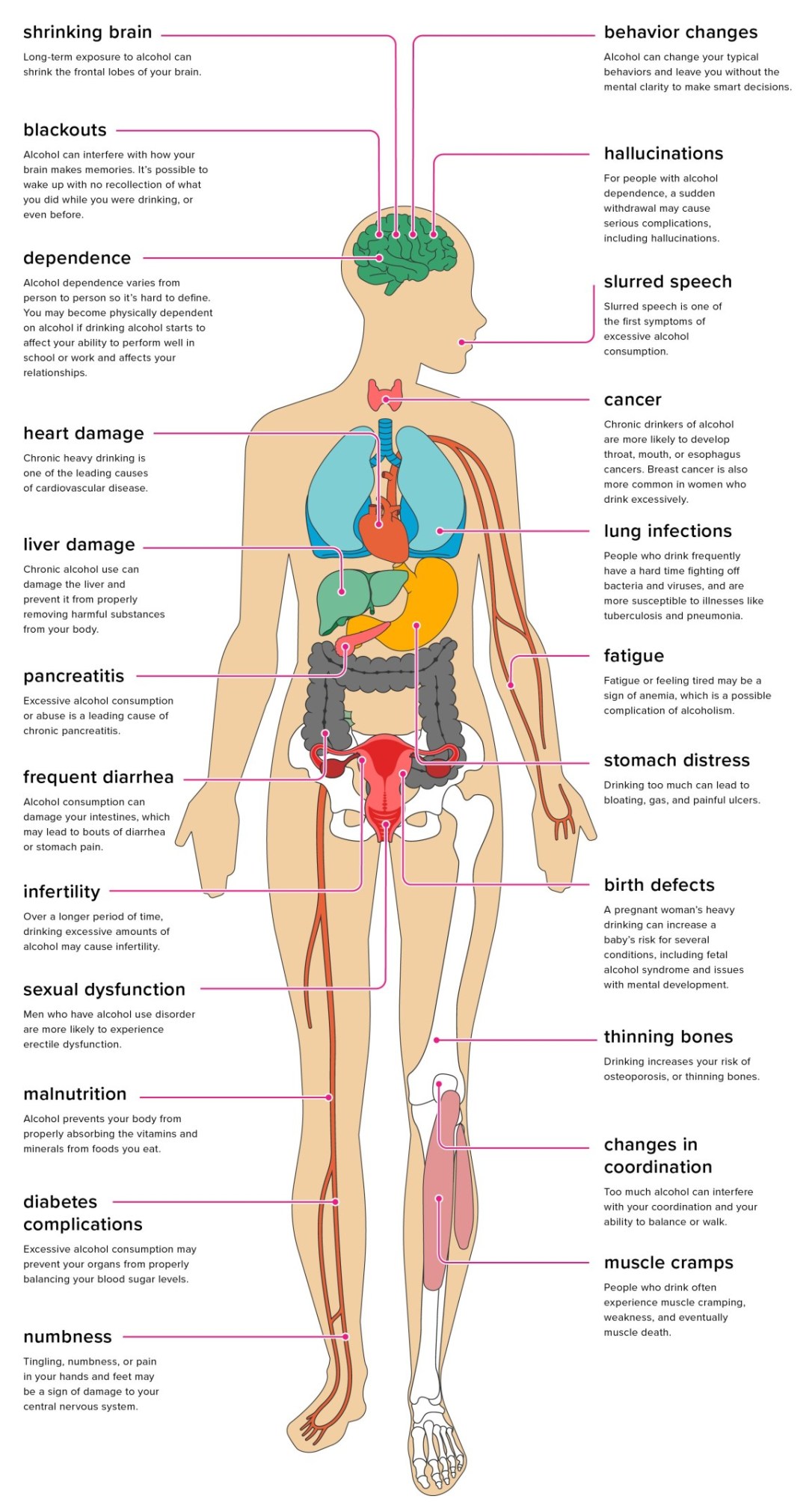
In addition, alcohol use effects the following:
Blood Sugar Levels: Malfunctioning of the pancreas & liver can cause blood sugar levels to drop, effect the production of insulin, resulting in hypoglycemia.
Central Nervous System: Alcohol inhibits communication between the brain & body resulting in slurred speech & poor coordination. Numbness &/or tingling in the hands & feet can also occur, as well as inhibited creation of long term memory and cognitive abilities. Long term excessive consumption can damage the frontal lobe effecting emotional control, memory & decision making abilities.
Dependency: Long term excessive use can result in physical & emotional dependency. Professional help may be needed to treat dependency & addiction, and medical support is recommended to help manage withdrawal which can also result in the following symptoms:
• Anxiety
• Nervousness
• Nausea
• Tremors
• High Blood Pressure
• Irregular Heartbeat
• Heavy Sweating
• Seizures
• Hallucinations
• Delirium
Circulation: Excessive long-term alcohol consumption increases the risk of heart disease and can result in the following:
• High Blood Pressure
• Irregular Heartbeat
• Inhibited Blood Circulation
• Stroke
• Heart Attack
• Heart Disease
• Heart Failure
• Anaemia
Sexual & Reproductive Health:
• Erectile Dysfunction
• Consumption can lower sex hormone production, inhibiting the libido
• Women may stop menstruating, effecting fertility. Use & abuse while pregnant can result in premature birth, miscarriage, stillbirth & fetal Alcohol Syndrome among other conditions.
If you’re concerned about your alcohol use or someone else’s and would like more information, feel free to get in touch with us at BroadMinds Therapy to see how we can help you. You can contact us discretely by calling 0899420568, emailing help@broadmindstherapy.org or contact us via this web page.
Finally, if you like what you read please like & share to help reach & help as many people as possible,
Thank You.

 Integrative Counselling And Psychotherapy